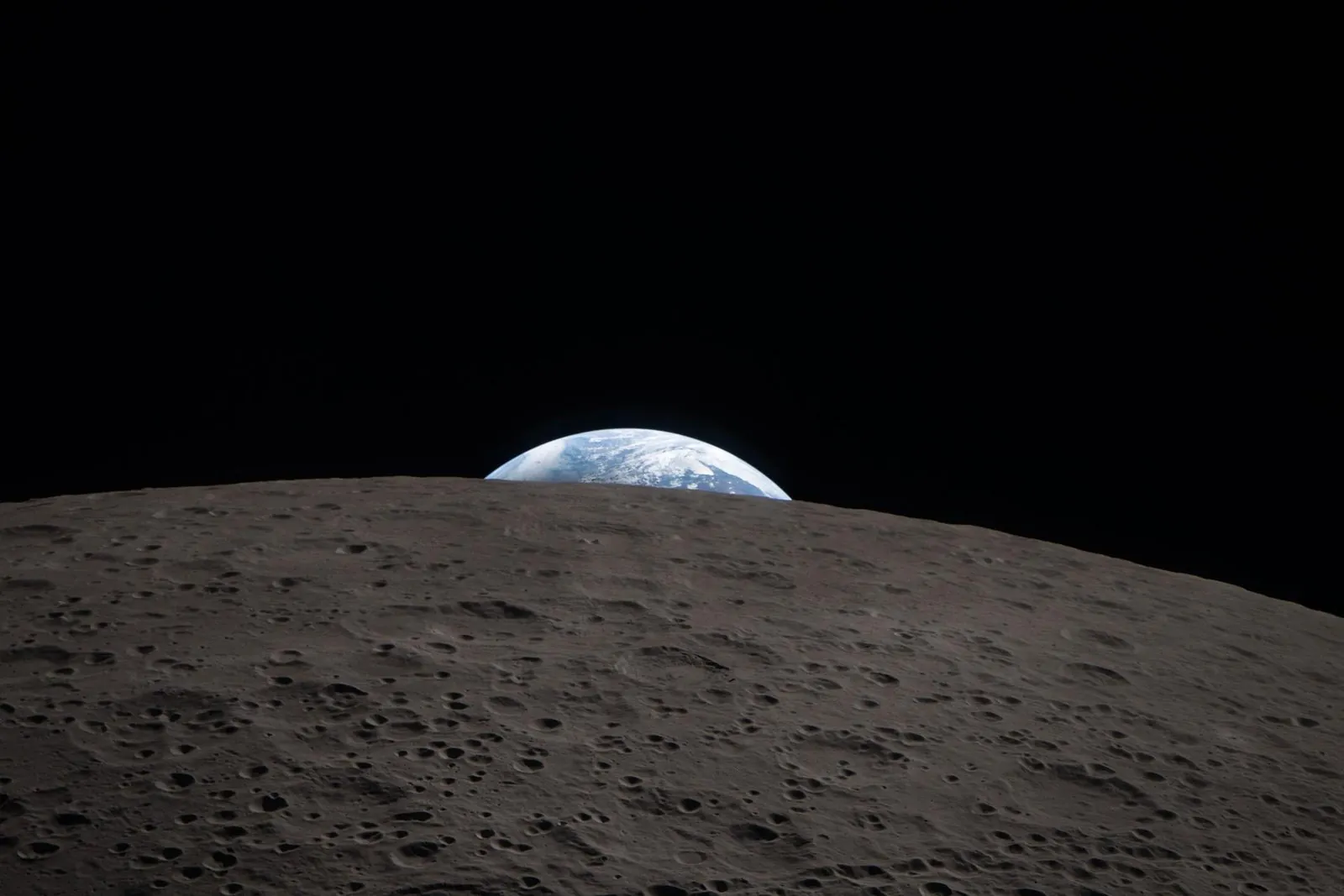
Most people would guess that the scariest part of a trip around the Moon is the launch. For Artemis II commander Reid Wiseman, the moment of real fear came on the sixth day, beyond the Moon, while he watched a number on a screen.
01One number from Houston
Artemis II launched on 1 April 2026 with four astronauts: NASA's Reid Wiseman, Victor Glover and Christina Koch, and the Canadian Space Agency's Jeremy Hansen. On 6 April, the sixth day of the flight, their Orion spacecraft, which the crew named Integrity, swung around the far side of the Moon.
Wiseman described what happened next at the Starmus VIII festival in Tenerife in October 2026, as reported by Live Science. Mission control in Houston had told the crew that their maximum distance from Earth would be 219,667 nautical miles, about 406,800 km. That was meant to be the farthest point of the trip. After it, the number on Orion's distance display should start going down.
02The counter went the wrong way
"I was watching this number, and I saw it hit 219,667, and I thought, 'Great, this is the farthest we will be from Earth, and the next number I will see will be 219,666 — we'll be going home,'" Wiseman said. "But about three minutes later, I didn't see 219,666; I saw 219,668. It went up."
About three minutes after that, it read 219,669. "That was the moment that I felt real fear because I thought we had just gone too far — we're never going to come home," he said.
"I thought we had just gone too far — we're never going to come home." Reid Wiseman, Artemis II commander
Nobody else saw it. According to Live Science, Glover and Koch were at the windows making science observations of the Moon, and Hansen was reporting to mission control. Then the counter dropped back to 219,668. "We're going home," Wiseman said, and the crew cheered.
How far past the expected peak did the display go? Two nautical miles, or about 3.7 km, on a trip of more than 406,000 km. By our calculation, that is less than a thousandth of one percent of the distance.
03Out of contact with Earth
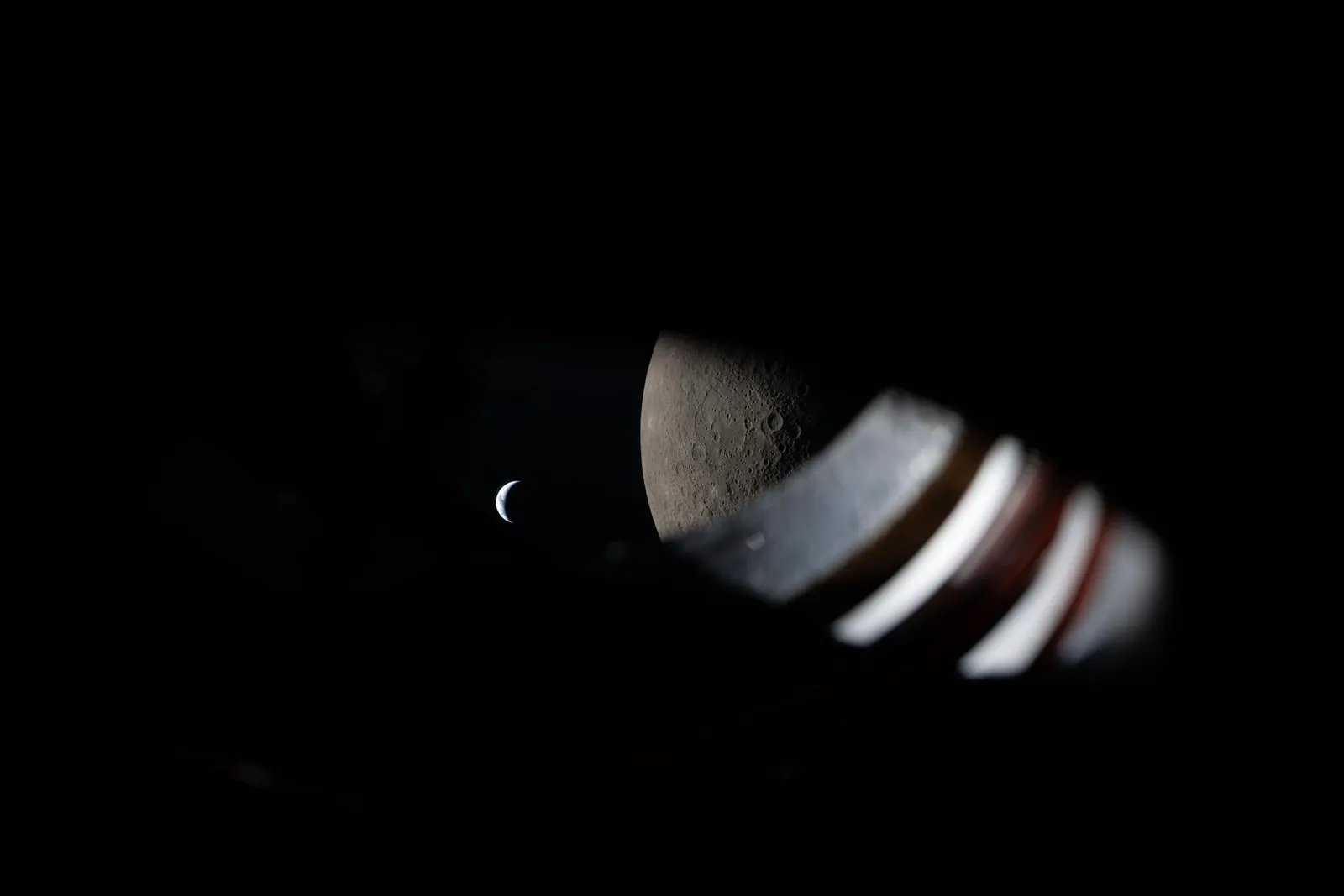
NASA's live mission blog shows how alone the crew was at that point. At 6:44 p.m. EDT on 6 April, Orion went into a planned communications blackout as it passed behind the Moon, which blocked radio signals from NASA's Deep Space Network for about 40 minutes. Orion made its closest approach to the Moon at 7:00 p.m., about 4,067 miles (6,545 km) above the surface.
Two minutes later, at 7:02 p.m. EDT (4:32 a.m. on 7 April in India), NASA logged the mission's maximum distance from Earth. The crew saw Earthrise and the signal came back at about 7:24 p.m. So the farthest point of the trip came while there was no radio link with Houston.
04They were never going to be stranded
The fear was real, but the danger Wiseman imagined was not. Artemis II flew a free-return trajectory. According to NASA's press kit, the engine burn on day two that sent Orion towards the Moon also set it on a path that would bring the crew back to Earth. Instead of needing an engine to come home, Orion would be pulled back by the gravity of the Earth and the Moon, with only three small correction burns on the way back to fine-tune the splashdown.
Engineers chose this partly for safety. Samantha Kenyon, an aerospace engineer at Virginia Tech, told Scientific American that the choice was between firing Orion's engines over the far side of the Moon, out of radio contact, or much earlier and closer to Earth. Doing it earlier "means less risk for the astronauts in the capsule", she said.
Wiseman gave the credit to the people on the ground. "Getting home safely is a testament to the engineering rigor and the flight control teams back here on planet Earth," he said at Starmus. "Those are the true heroes of this mission."
05Two different numbers
There is a small mystery in the story. NASA's official farthest distance for Artemis II is 252,756 miles (406,771 km). That works out to about 219,639 nautical miles, roughly 28 nautical miles (52 km) less than the 219,667 Wiseman said he was given. We could not find an explanation from NASA or in his talk, so we report both.
Either way, the record stands. NASA says the crew went 4,111 miles farther from Earth than Apollo 13 did in 1970, the previous record. They splashed down in the Pacific Ocean off San Diego on 10 April 2026, after flying 695,081 miles in total.
ENDSources
- 'We're never going to come home': Artemis II commander recalls the most terrifying moment of his 10-day trip around the moon (22 October 2026), Live Science
- Artemis II Flight Day 6: Lunar Flyby Updates (6 April 2026), NASA
- NASA's Artemis II Crew Eclipses Record for Farthest Human Spaceflight, NASA
- NASA Welcomes Record-Setting Artemis II Moonfarers Back to Earth, NASA
- Artemis II Press Kit, NASA
- NASA's Artemis II 'free return' trajectory lets gravity do the driving, Scientific American
- Artemis II mission trajectory, NASA Scientific Visualization Studio
- Artemis II moon crew flies farther than humans have ever gone before, Reuters
- A Breathtaking Earthset from Orion (art002e021278), NASA Image and Video Library
- A Room With a View (art002e012279), NASA Image and Video Library
Written by Facts Nero from the script of our Short and the sources above, all checked on 28 October 2026. Wiseman's account comes from his talk at Starmus VIII, as reported by Live Science; we found no NASA account of the moment. Corrections to the video: the numbers on the display were nautical miles; the overshoot was 2 nautical miles (about 3.7 km) on a trip of about 406,800 km; and because Artemis II flew a free-return trajectory, going slightly past the expected peak would not have stranded the crew. The fear was real; the danger was not. NASA's official farthest distance (252,756 miles) is about 28 nautical miles (52 km) less than the figure Wiseman quoted, and we could not find an explanation for the difference. The conversions and percentages are our own calculations.