Why Artemis III won't land on the Moon
Artemis III was meant to put astronauts back on the Moon. Now it will test Moon landers in Earth orbit instead, and the first landing has moved to Artemis IV in 2028.
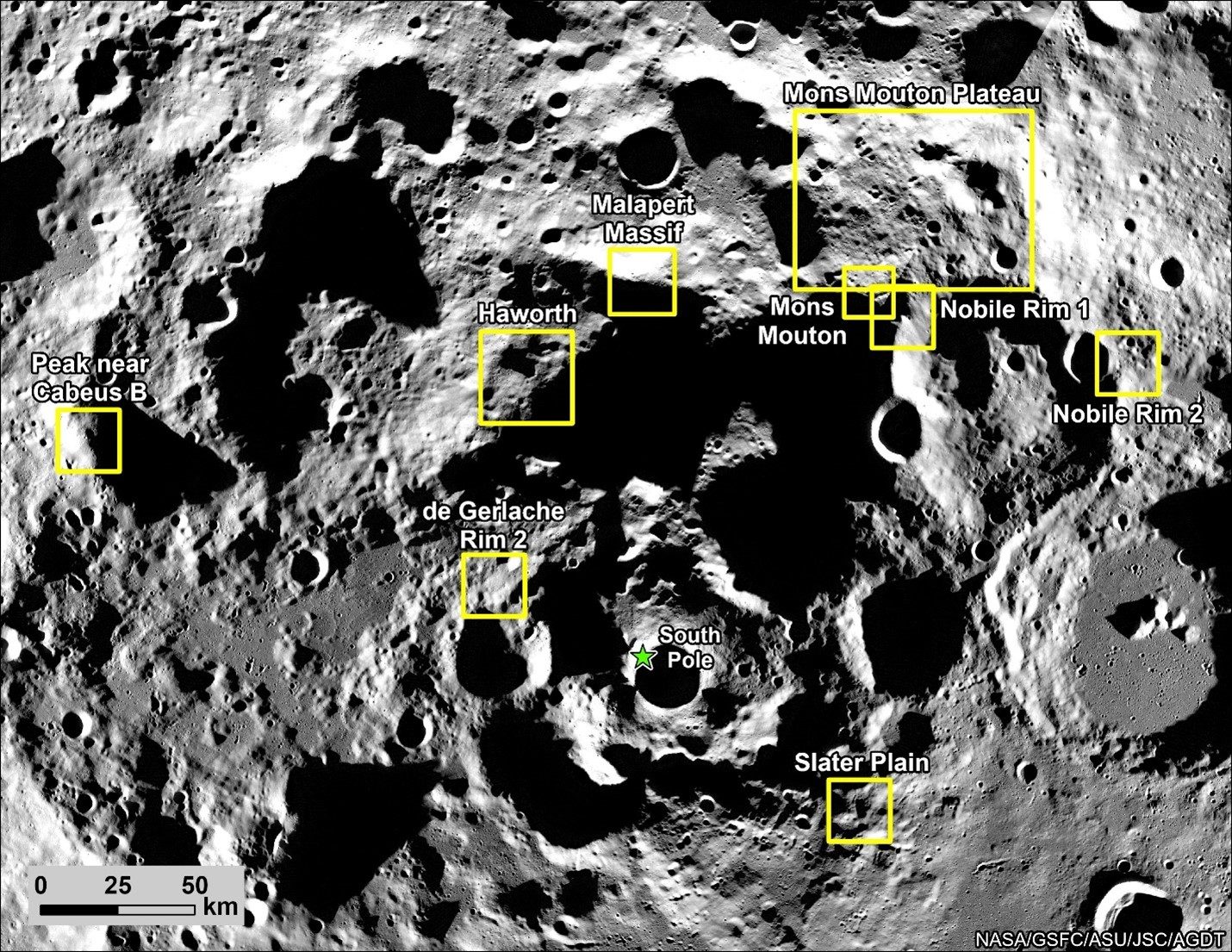
Artemis III was supposed to be the big one: the mission that put astronauts back on the Moon, near its south pole, for the first time since Apollo 17 left in December 1972. In January 2024, NASA was aiming to launch it in September 2026. That would have been right about now.
It isn't happening. When Artemis III flies, its four astronauts won't go to the Moon at all. They will stay a few hundred kilometres above Earth, testing the hardware that is meant to land the next crew.
01The landing moved to Artemis IV
On 27 February 2026, NASA rewrote the plan. Artemis III became a test flight in low Earth orbit, set for 2027, and the first landing moved to Artemis IV in 2028. NASA also said it plans at least one surface landing every year after that.
The landers got reshuffled too. Under the old contracts, SpaceX's Starship was booked for Artemis III and IV, and Blue Origin's Blue Moon for Artemis V. Now test versions of both landers fly on Artemis III, and neither company has been assigned the first landing. NASA says it will decide which goes first based on lander readiness.
02Why practise close to home
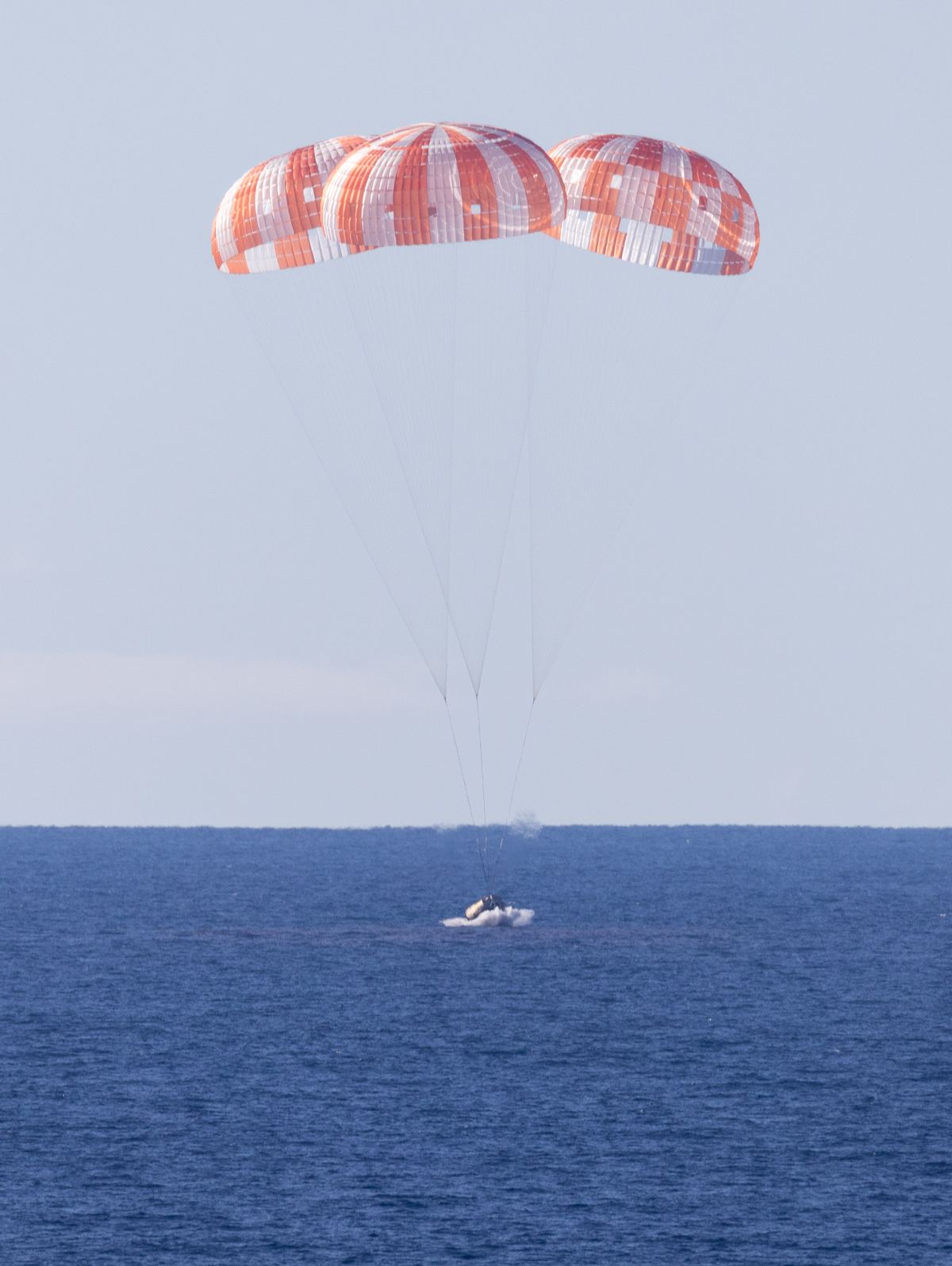
The SLS rocket and Orion have already flown a crew. Artemis II launched on 1 April 2026 and took four astronauts around the Moon, 252,756 miles (about 406,800 km) from Earth, farther than any humans had travelled before. They splashed down off San Diego on 10 April. NASA's analysis found 9 spots of char loss on Orion's heat shield, compared with 103 on Artemis I.
The landers are less far along. In March, NASA's Office of Inspector General reported that both lander programmes faced schedule delays, technical difficulties and integration challenges. It also warned that if a lander suffered a catastrophic event, NASA would not have the capability to rescue stranded astronauts from space or the lunar surface.
NASA's answer is to try the landers out in Earth orbit first. "Every piece of this mission in Earth orbit is designed to reduce risk before we put astronauts back on the Moon," said Jeremy Parsons, NASA's Artemis program manager. When the change was announced in February, NASA Associate Administrator Amit Kshatriya said the agency was "looking back to the wisdom of the folks that designed Apollo."
03Meet the crew
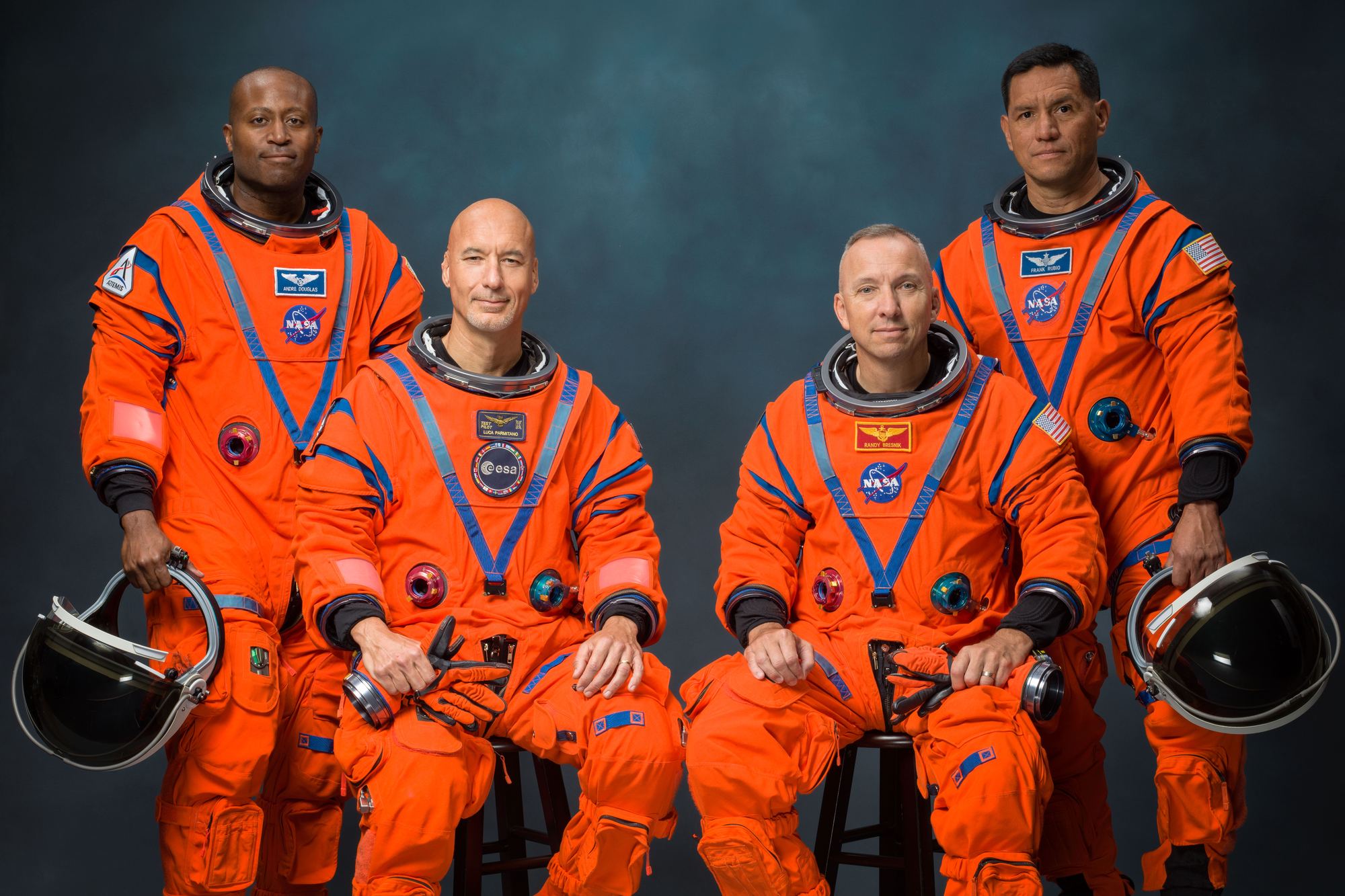
NASA named the four astronauts on 9 June 2026. The commander is Randy Bresnik, a retired US Marine colonel on his third mission. The pilot is Luca Parmitano of the European Space Agency, also on his third spaceflight, and the first ESA astronaut assigned to an Artemis mission.
The two mission specialists are Frank Rubio, who set the record for the longest single spaceflight by an American astronaut at 371 days, and Andre Douglas, who will fly to space for the first time after serving as a backup and closeout crew member for Artemis II. Bob Hines is the backup and is training alongside them.
04The 14-day plan
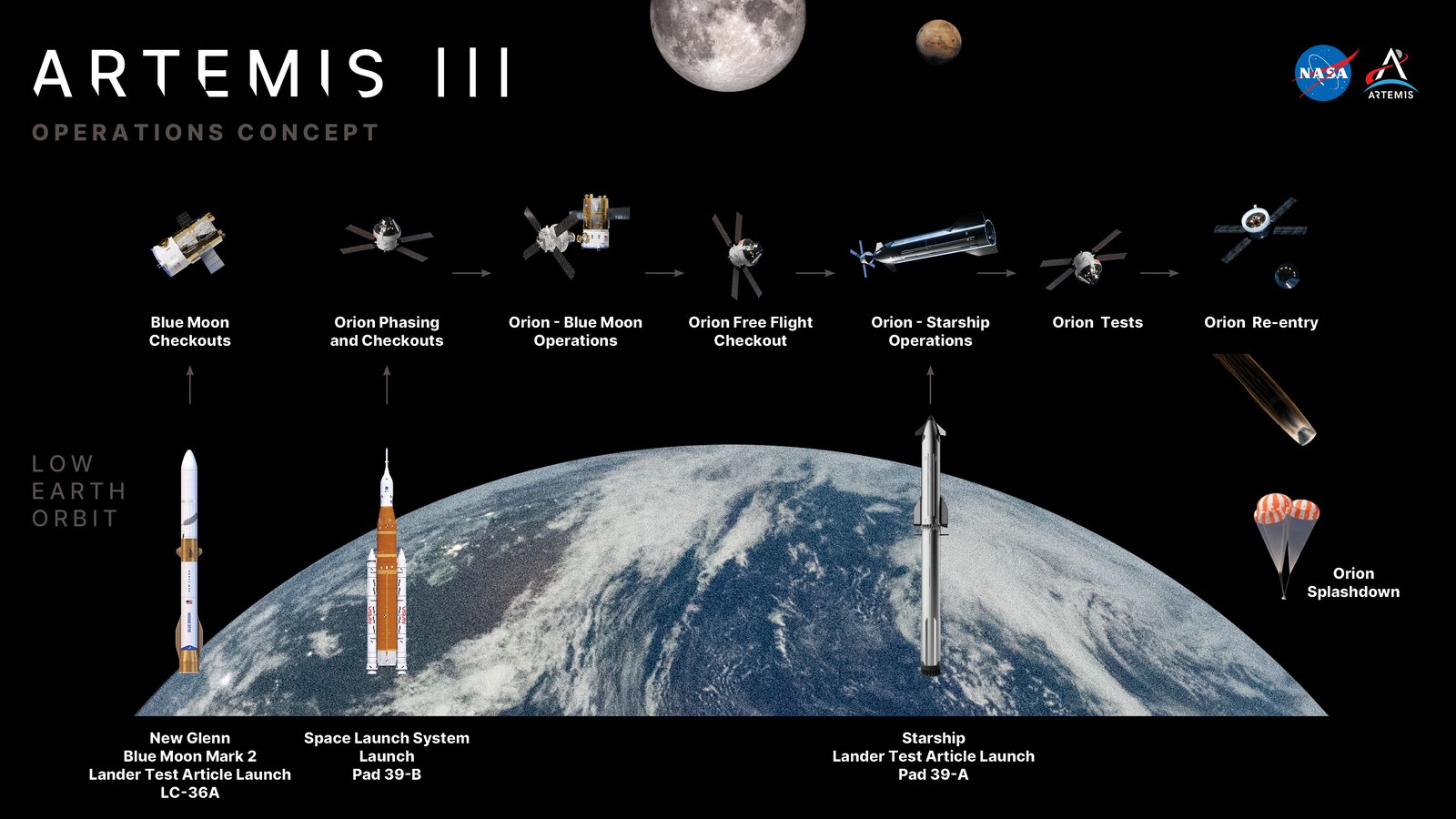
Artemis III needs three heavy-lift rockets to launch within a relatively short period of time, all from Florida. "We're launching three spacecraft on three different rockets and testing how they operate together — something NASA has never attempted," Parsons said.
First, Blue Origin's New Glenn puts a test version of the Blue Moon Mark 2 lander into a circular orbit about 439 km up. It can wait there for up to 30 days. Only days later, NASA's SLS launches Orion and the crew from Kennedy Space Center. Orion starts in a stretched orbit, between 29 and 1,806 km high, then moves to a circular orbit of about 555 km, which NASA says is for thermal stabilisation.
The crew spends the first two days checking out Orion, then docks with Blue Moon. For about two days, astronauts open the hatch and enter the lander to assess its cabin, controls and life-support systems, while teams check that it holds the right atmosphere and pressure. NASA says this will be its first evaluation of a commercial lunar lander with crew.
Later in the mission, SpaceX launches a Starship test ship, with a docking system on its forward end, into a lower orbit about 381 km up. Orion docks with it for a test expected to last up to two hours. The crew will not go inside Starship. NASA wants to see how the two spacecraft behave as one docked system, including control, communications, software and the dynamics of docking and undocking.
After that, Orion has up to five more days in orbit for other tests, including of the orange survival suits the crew would rely on if Orion lost cabin pressure. NASA says those suits can keep astronauts alive for up to six days. Then Orion splashes down in the Pacific off California.
05A lot still has to go right
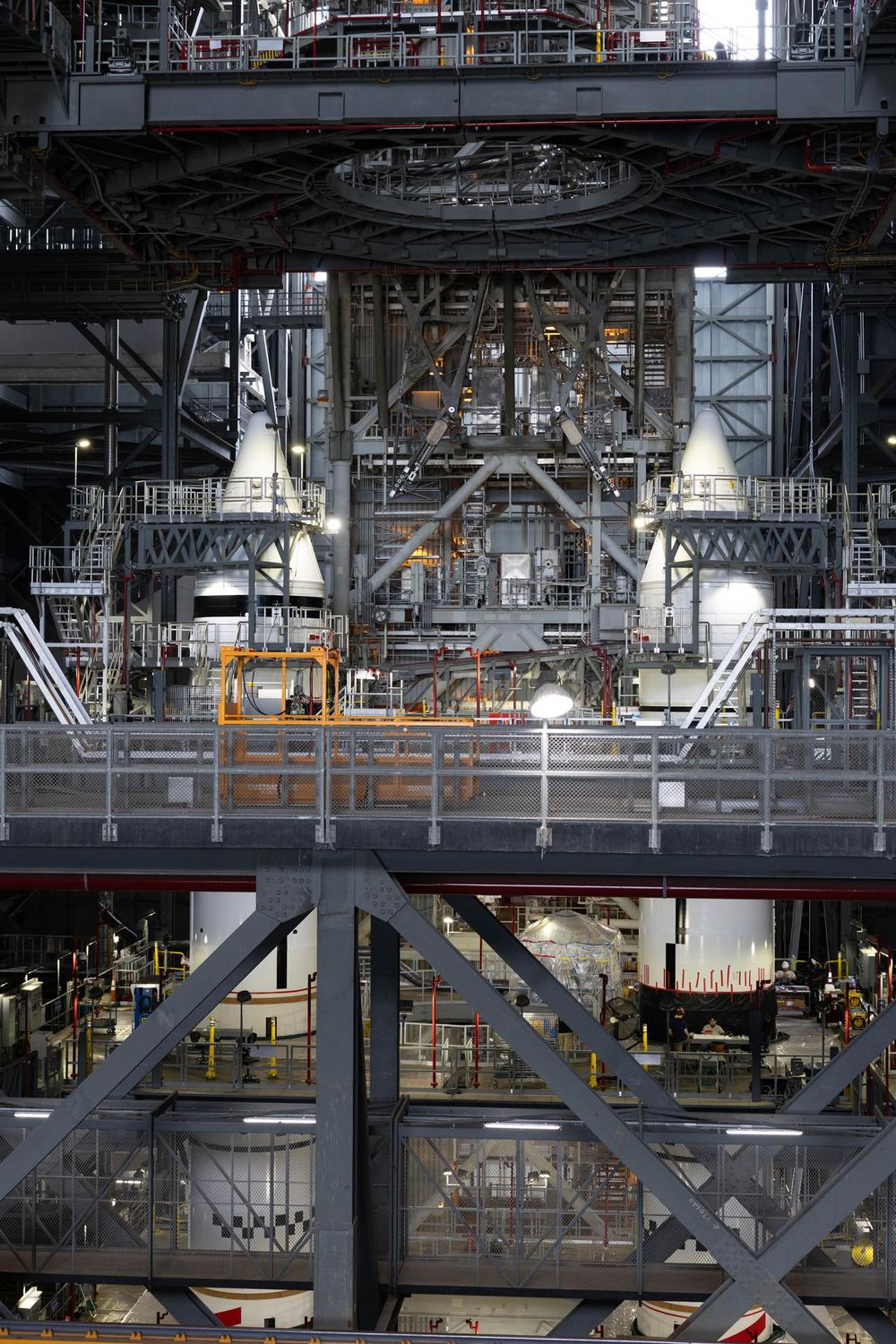
The rocket is coming together. On 30 September, teams at Kennedy Space Center finished stacking the twin solid rocket boosters, and all four RS-25 engines are installed on the core stage. NASA plans to roll the partly built rocket to Launch Pad 39B for a fuelling test in the coming months. Since Artemis III isn't going to the Moon, a spacer stands in for the rocket's upper stage.
The landers have further to go. Starship reached orbit for the first time on 28 September 2026, on its 14th flight, even though one booster engine and one upper-stage engine shut down early on the way up. To reach the Moon, a Starship lander will need to be refuelled in orbit by tanker Starships, and SpaceX has not yet moved propellant from one vehicle to another in space. Blue Origin, meanwhile, is rebuilding its launch pad after a New Glenn rocket exploded there during a pre-launch engine test on 28 May.
NASA's official target is 2027. At a press conference on 23 October, Administrator Jared Isaacman spoke of a "summer 2027 Artemis III launch", and a chart shown at the briefing put the window between May and September, according to Aerospace America. But in September, in an internal memo published by NASA Watch and reported by FOX 35 Orlando, Isaacman told staff: "Right now, we are ~90 days broken against the Artemis III schedule," adding that there were still "opportunities for the schedule to recover."
06Then, finally, the Moon
If Artemis III goes to plan, Artemis IV is meant to land in 2028. One of the two landers will carry two astronauts down near the south pole while the other two wait in Orion. NASA is planning two moonwalks of about two hours each, in spacesuits from Axiom Space. According to SpaceNews and Ars Technica, NASA and Axiom are working on a simplified version of that suit for the first landings.
Before anyone lands, NASA wants a crew to climb inside a commercial Moon lander while it is still orbiting Earth.
Apollo did something similar. In March 1969, Apollo 9 tested the lunar module in Earth orbit, the first time astronauts flew one, and two of its crew climbed inside it through the docking tunnel. Four months later, in July 1969, Apollo 11 landed on the Moon.
Sources
- NASA's Artemis III mission to test future Moon lander operations, NASA
- NASA adds mission to Artemis lunar program, updates architecture, NASA
- NASA marches toward Artemis III mission in 2027, names crew members, NASA
- NASA, partners accelerate lander development for 2028 Moon missions, NASA
- NASA completes Artemis III booster stacking, shares status update, NASA
- NASA welcomes record-setting Artemis II moonfarers back to Earth, NASA
- Rigorous analysis confirms NASA's Artemis II heat shield performance, NASA
- Artemis lander program faces schedule delays and unmitigated crew safety risks, NASA Office of Inspector General
- NASA shares progress toward early Artemis Moon missions with crew (January 2024), NASA
- NASA provides update on Artemis III Moon landing regions, NASA
- Orion crew systems: Orion Crew Survival System suits, NASA
- NASA eyeing year-end tanking test and summer 2027 launch for Artemis III, Aerospace America
- NASA lays out plan for Artemis 3 moon-lander test flight, but when will it launch?, Space.com
- Report: NASA's Artemis III mission is 3 months behind schedule, FOX 35 Orlando
- Starship Flight 14, SpaceX
- Starship makes orbit, Flight 15 preps in full swing, NASASpaceFlight.com
- Starship just reached orbit for the 1st time. What's next for the SpaceX megarocket?, Space.com
- Blue Origin's New Glenn rocket explodes during prelaunch testing at Cape Canaveral, Spaceflight Now
- Axiom Space working to revise lunar spacesuit for early Artemis missions, SpaceNews
- Wary of Artemis IV timeline, NASA is changing lunar spacesuit design, Ars Technica
- Apollo 9: Mission details, NASA
- Apollo 11, NASA
- Apollo 17, NASA
Written by Facts Nero from NASA, the NASA Office of Inspector General, SpaceX and news reports. Every claim was checked against the sources above on 25 October 2026, and anything that comes only from news reports is credited in the text. Plans for Artemis III are still changing, and we will update this page when they do.
More from Facts Nero
-
 Long video · 14 minNASA/JPL-Caltech
Voyager 1 is about to be one light-day from Earth
Launched in 1977 with less memory than one phone photo. On 18 November 2026 a message to it will take a full day to arrive.
Space probesRead · 7 minWatch ▶ -
 Short · 65 sNASA
NASA's nuclear spaceship is heading to Mars
SR-1 Freedom uses a small reactor to power electric thrusters. Launch is planned for late 2028.
SpacecraftRead · 2 minWatch ▶