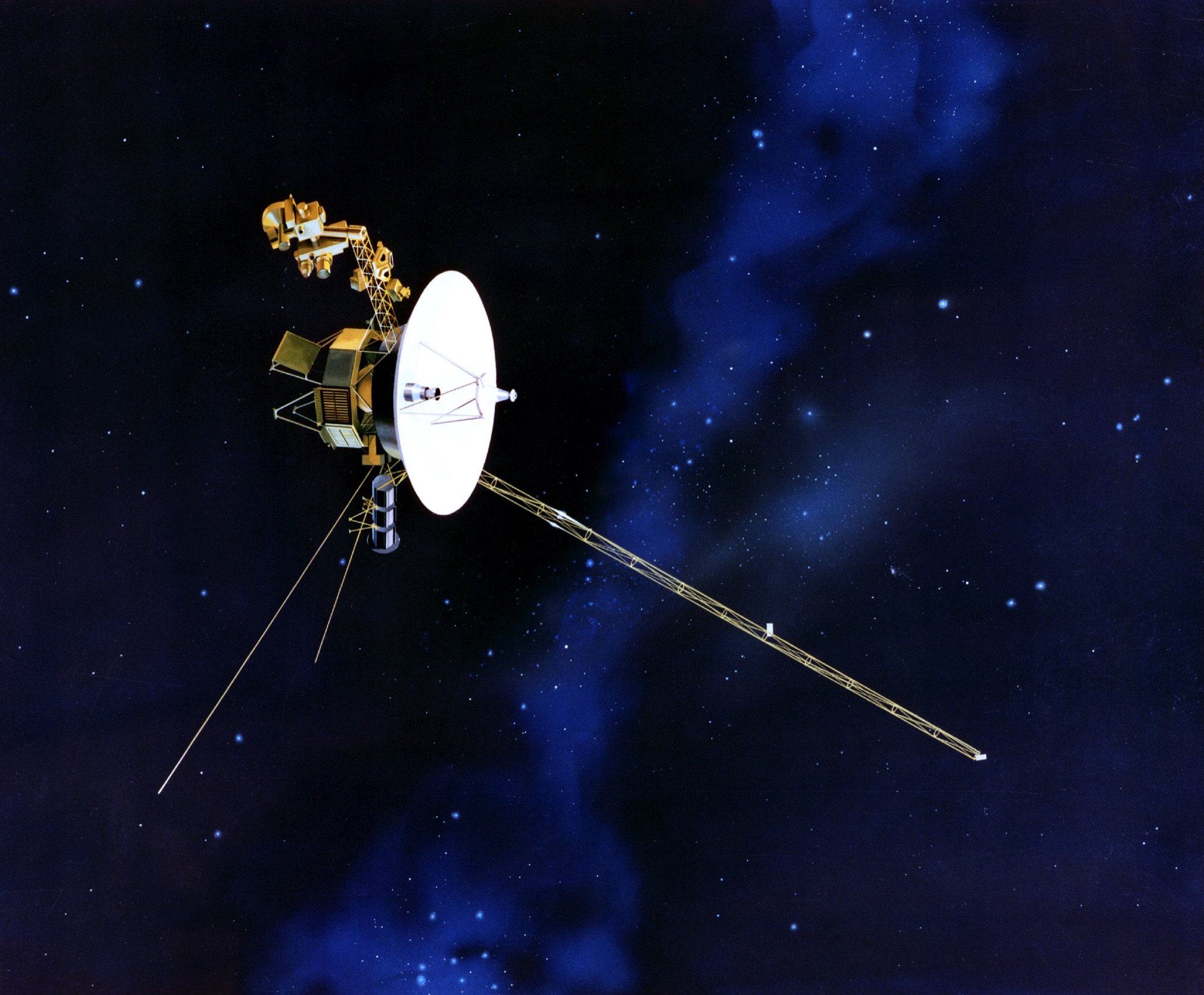
Voyager 1 is about to be one light-day from Earth
It was built in the 1970s, it has less memory than one photo on your phone, and on 18 November 2026 a message to it will take a full day to arrive.
Way past the last planet, past the point where even the Sun's wind gives up, a tiny machine is falling through the dark. It isn't going anywhere in particular. It is never coming back. And it is carrying a message from us.
It was built in the 1970s. It has less memory than one photo on your phone. Its nuclear heart is slowly dying, and one by one its instruments are going quiet. And still, on 18 November 2026, it becomes the first human-made object to reach one full light-day from Earth. Send it a message at breakfast today, and it gets it at breakfast tomorrow.
Its name is Voyager 1. It was only supposed to visit Jupiter and Saturn. That was almost fifty years ago, and it is still talking to us.
01A once-in-175-years alignment
It started with lucky timing. In 1965, people at NASA's Jet Propulsion Laboratory noticed that in the late 1970s Jupiter, Saturn, Uranus and Neptune would all sit on the same side of the Sun. That happens about once every 175 years. The last time, Thomas Jefferson was president.
That line-up meant one spacecraft could hop from planet to planet, using each one's gravity like a slingshot to steal speed and fling itself to the next. A trip that should take thirty years could take twelve.
So NASA built two identical probes of about 722 kilograms each, roughly a small car. Out there sunlight is far too weak for solar panels, so they run on three small nuclear batteries powered by the heat of decaying plutonium.
Voyager 1 launched from Florida on 5 September 1977. It actually launched second: its twin, Voyager 2, had left sixteen days earlier. Voyager 1 got the number one because it was on a faster path and would reach Jupiter first.
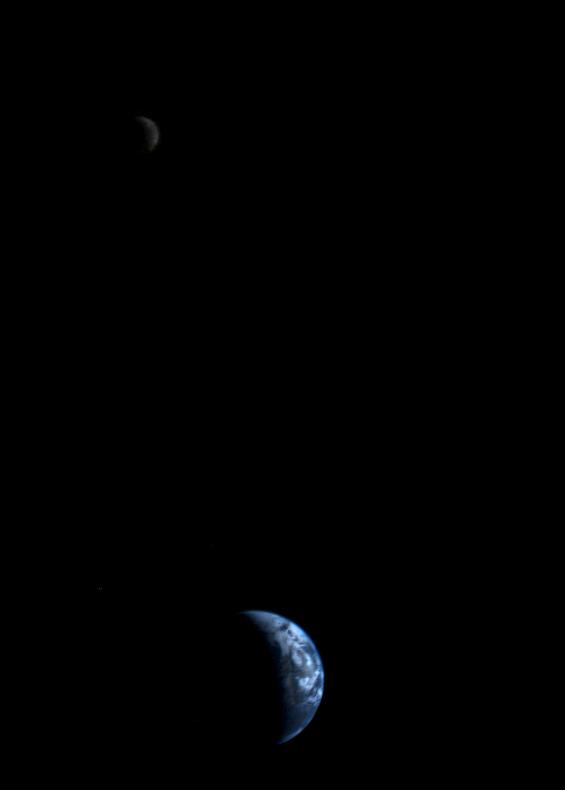
On 15 December 1977 it overtook Voyager 2. It has been in the lead ever since.
02Jupiter, and a volcano on another world
In early 1979 Voyager 1 closed in on Jupiter and started filming. The team stitched photo after photo into a movie, and for the first time people on Earth watched the clouds of another planet move. The Great Red Spot, a storm big enough to swallow the Earth, was just spinning away.
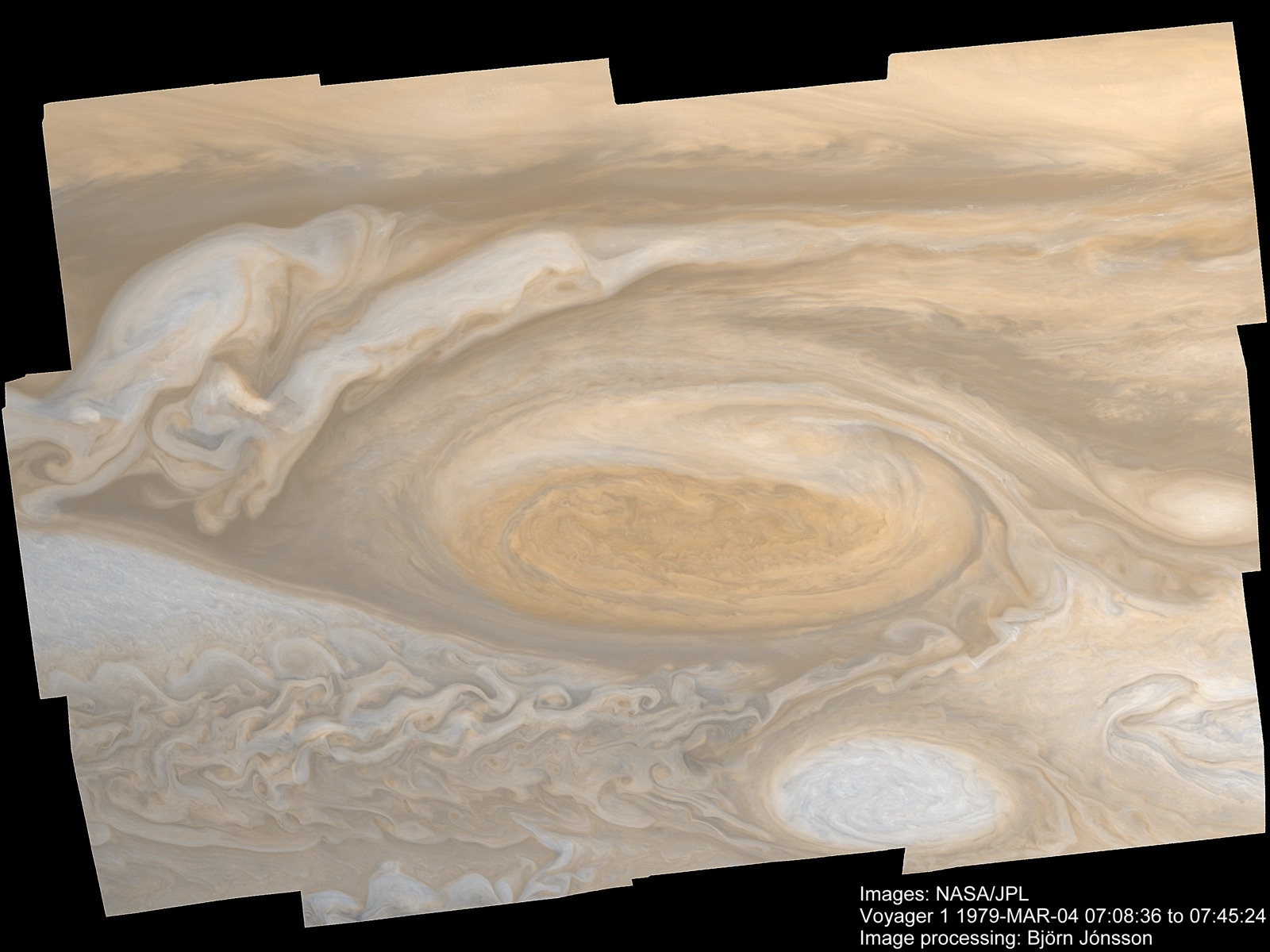
On 5 March 1979 it flew past Jupiter at 280,000 kilometres, and the surprises piled up: a faint ring nobody knew Jupiter had, two new moons later named Thebe and Metis, and flashes of lightning on the dark side, the first lightning ever seen on another world.
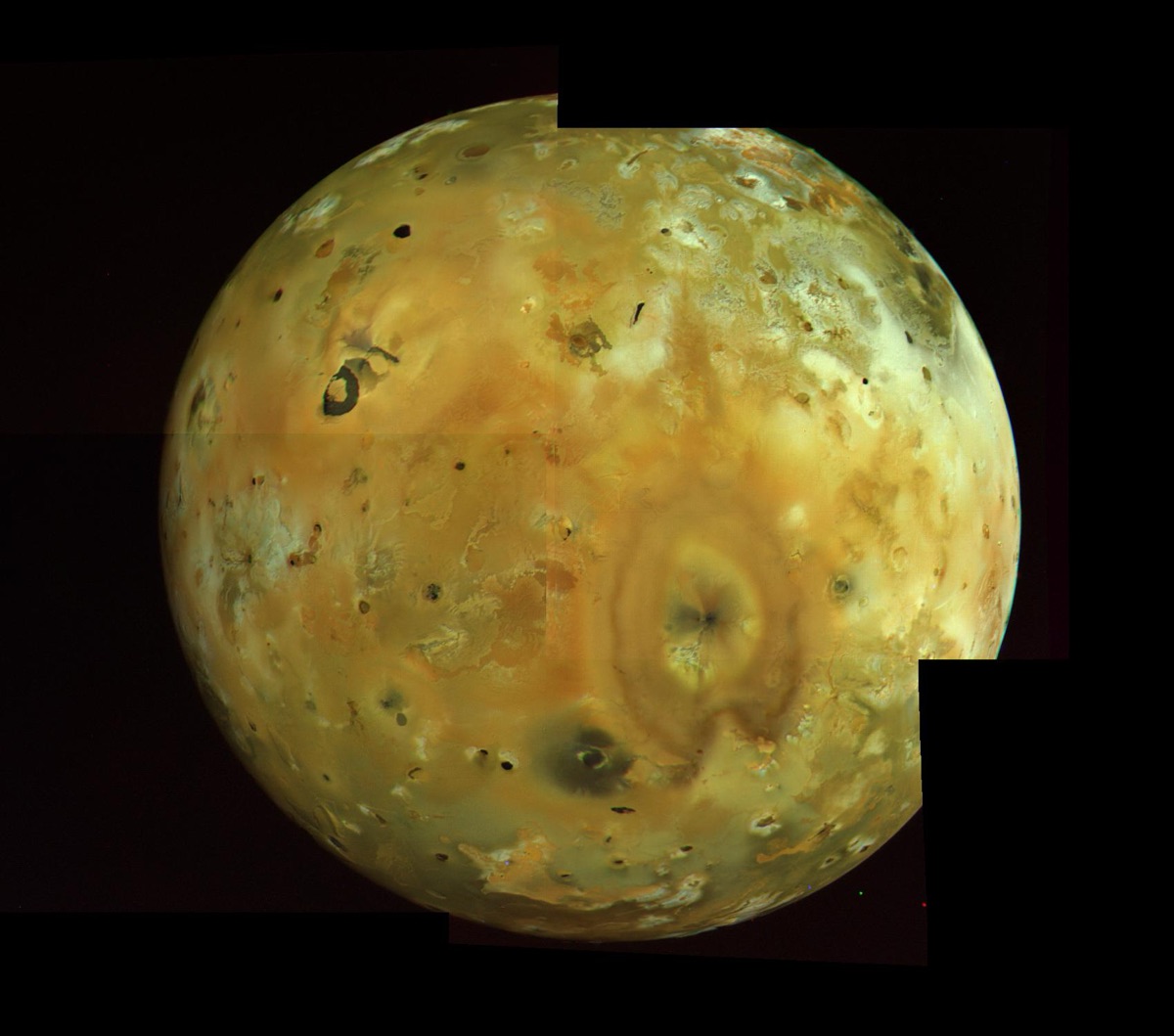
The biggest shock came four days later. Going through navigation images of the moon Io, the team spotted a plume shooting up from its edge. It was an active volcano, the first one ever seen anywhere except Earth.
03Saturn, and the choice that ended the tour
In November 1980 Voyager 1 swung past Saturn at 126,000 kilometres. Up close the rings were not a few smooth bands. They were hundreds of thin ringlets, like the grooves on a vinyl record. Voyager found five new moons, a new ring called the G ring, and small shepherd moons that herd the ring particles and keep them in line.
Then the team had to make a hard call. Saturn's biggest moon, Titan, was wrapped in a thick orange haze, the only moon anywhere with a real atmosphere. A close pass would bend Voyager 1's path up and out of the plane of the planets. No Uranus. No Neptune. The planet tour would end right there.
They went for it anyway.
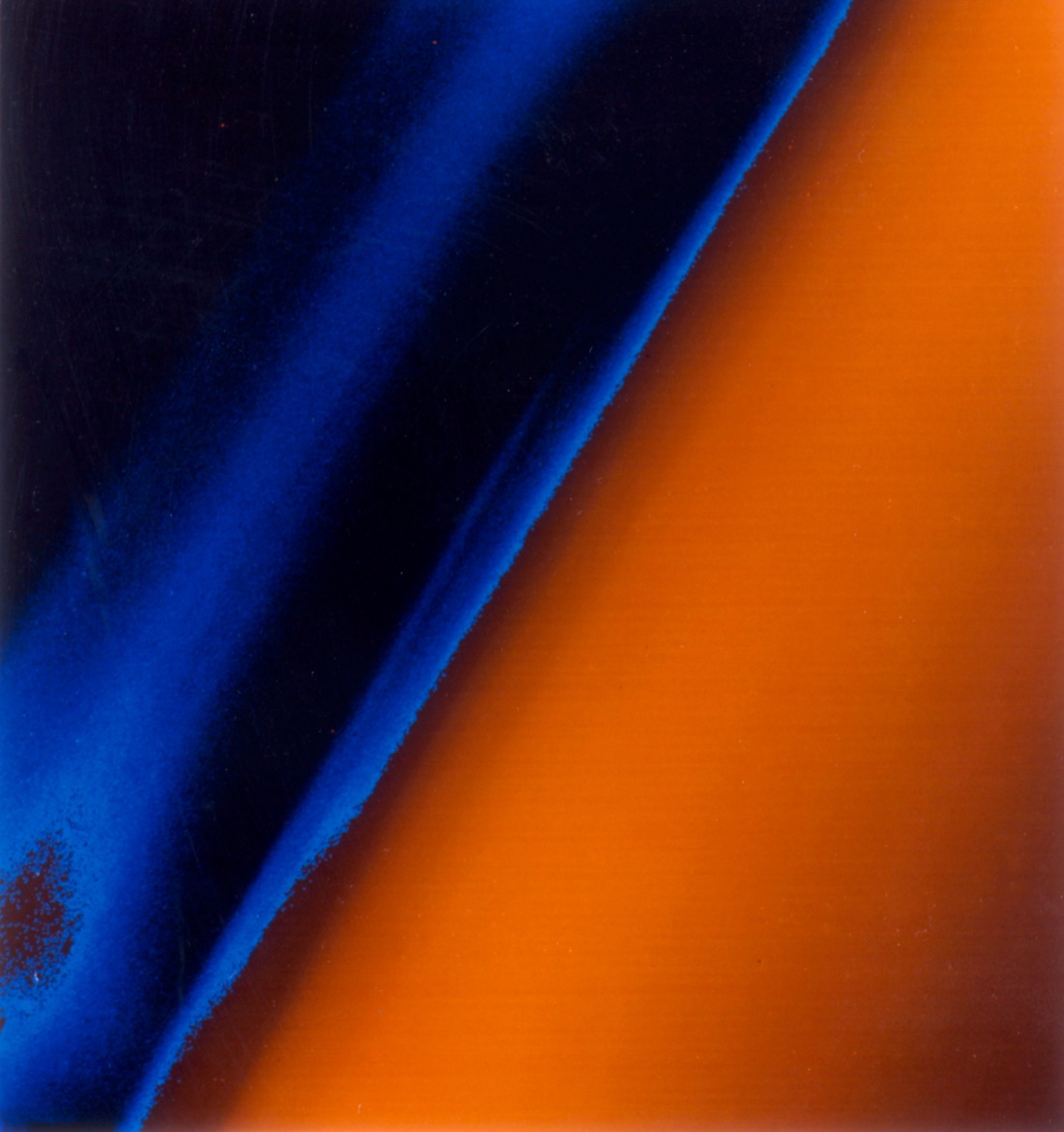
Titan's air turned out to be mostly nitrogen, just like ours, mixed with methane: the first nitrogen-rich atmosphere found beyond Earth. Voyager 1 then climbed up and out of the solar system, while Voyager 2 carried on to Uranus and Neptune without it.
04The Pale Blue Dot
By 1990 Voyager 1 was about six billion kilometres from the Sun and the team was about to switch off its cameras to save power. The astronomer Carl Sagan had one last idea: before you shut them down, turn around and take one more picture of home.
On 14 February 1990 Voyager 1 took a group photo of the solar system from the outside. Six planets, tiny dots of light. And sitting in a stray beam of sunlight is Earth, smaller than a single pixel.
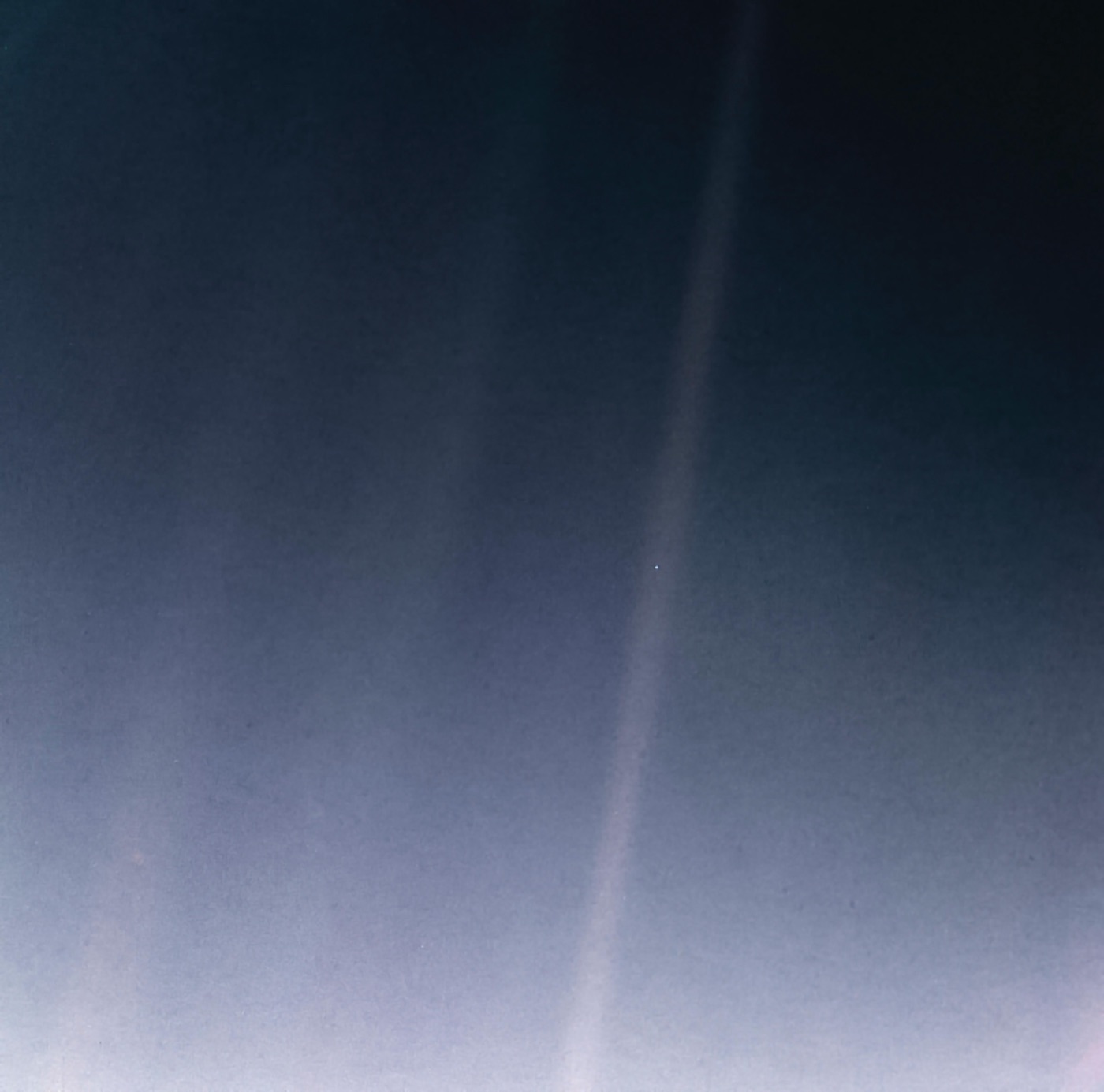
Those were the last of the 67,000 pictures the two Voyagers ever took. The cameras went dark the same day.
05A message in a bottle
Bolted to the side of Voyager 1 is something that has nothing to do with science: a gold-plated copper record, about thirty centimetres wide. It holds greetings in 55 languages, starting with Akkadian, spoken around 6,000 years ago. There are sounds of Earth, from whales and thunder to people laughing, ninety minutes of music from Bach to Chuck Berry, and 115 pictures of life here.
The cover is an instruction manual with no words. It shows how to play the record, and a map uses pulsars to point back to our Sun. A tiny sample of uranium is plated onto it; as it decays it works like a clock, so whoever finds it can work out how long it has been travelling.
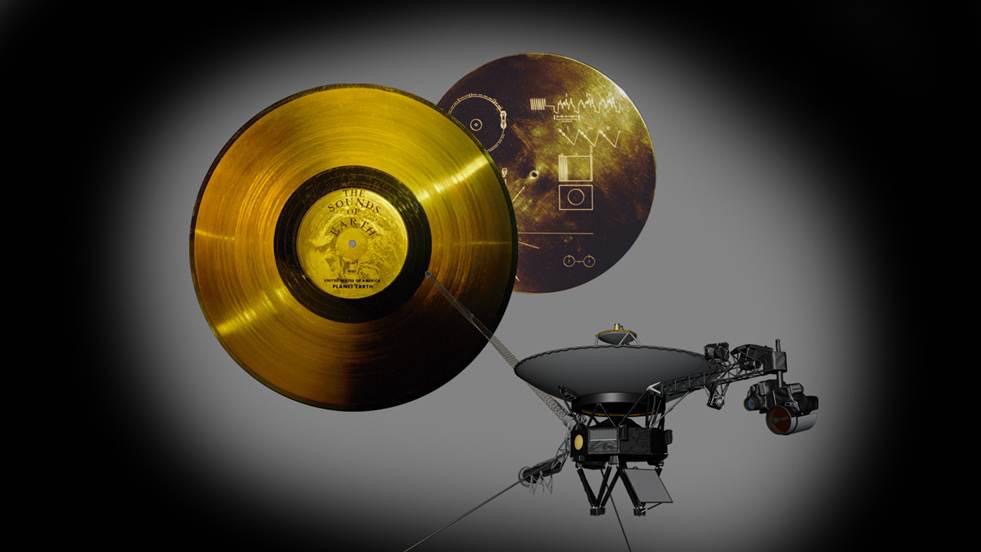
The idea of sending a message came from the project's manager, John Casani. He died in 2025, at 92. His message is still flying.
06Leaving the Sun's bubble
The Sun constantly blows a wind of charged particles in every direction, and that wind inflates a giant bubble around the planets called the heliosphere. Nobody knew where it ended, so in 1990 Voyager got a new job: keep flying until you find the edge.
On 17 February 1998 it passed Pioneer 10 and became the most distant human-made object. In December 2004 it crossed the termination shock, where the solar wind suddenly slows down; on the exact day it crossed, not a single bit of its data reached Earth. Then on 25 August 2012 the particles from the Sun around it dropped away. For the first time, something we built had left the Sun's bubble and was in interstellar space.
07Fixing a 1970s computer from 24 billion kilometres
Voyager 1's nuclear batteries lose about four watts every year, and every command takes almost a full day to arrive. Fixing it is like repairing a 1970s computer in the dark by sending letters and waiting two days for every reply.
On 14 November 2023 it started sending gibberish. After months of detective work the team found one dead memory chip in a flight computer. Nobody can fly out there to swap it, so they cut the broken software into pieces and tucked them into other parts of the memory. On 20 April 2024 Voyager 1 sent back data that made sense again.
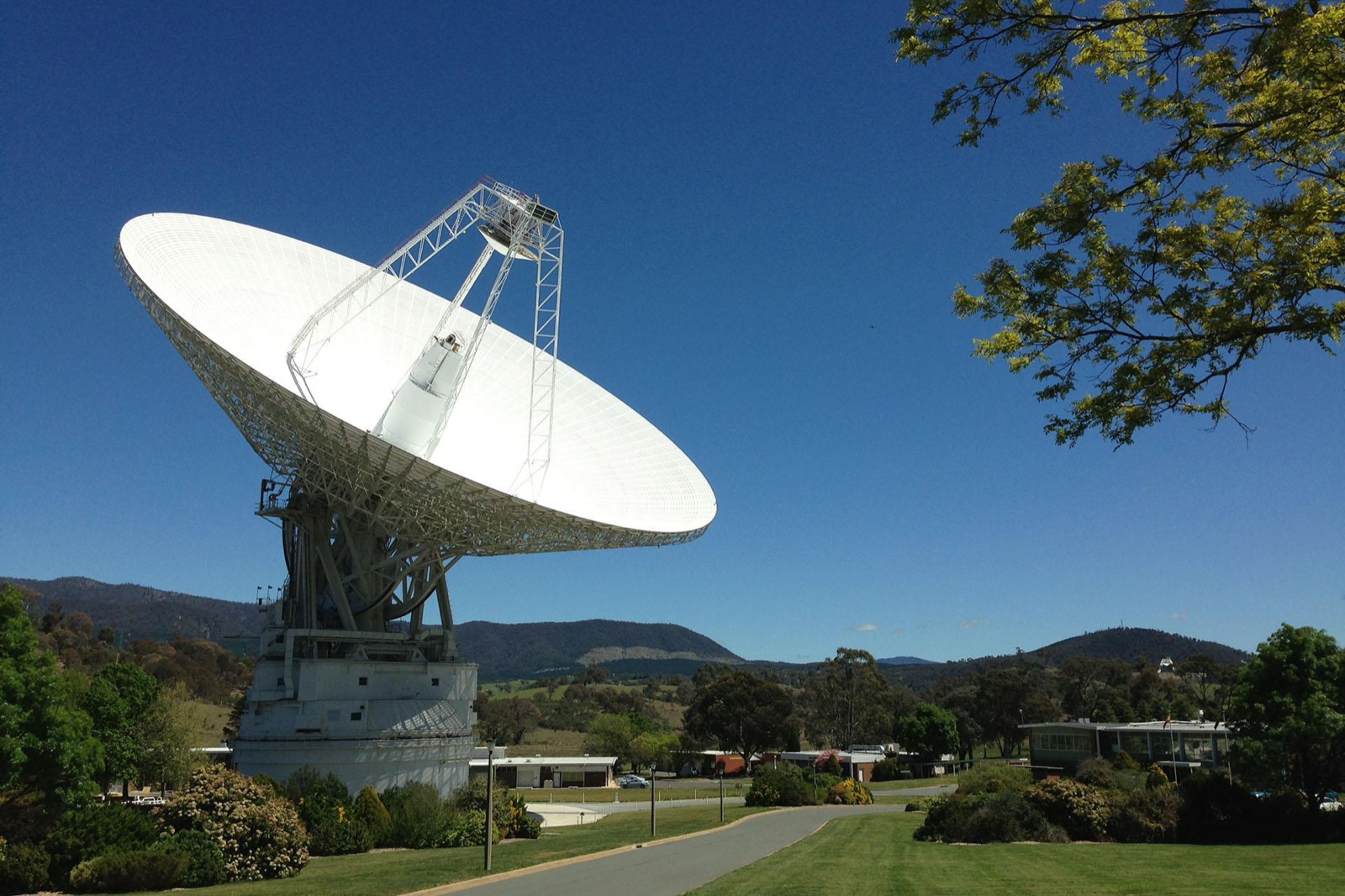
Six months later a simple command to turn on a heater tripped its fault protection, and on 19 October 2024 the signal vanished. Voyager had switched to a backup radio it had not used to talk to Earth since 1981. NASA's dishes found that faint whisper anyway, and by late November Voyager 1 was back to normal. In 2025 the team revived thrusters that had been considered dead since 2004.
Some fights can't be won. Voyager 1 launched with ten science instruments, and to save power they are being switched off one by one. On 17 April 2026 another one went dark. Two are still running: the magnetometer and the plasma wave sensor.
08After the signal stops
Right now Voyager 1 is almost 26 billion kilometres away and still flying at about 17 kilometres every second. One day the power will drop too low, the last instrument will go quiet, and the engineers will send a message that nothing answers.
That is not the end of the trip. In about 40,000 years it will drift past a small star called Gliese 445, still about 1.7 light-years from it. Billions of years from now, when our Sun swells into a red giant, astronomers think the Golden Record will very likely still be out there, at least partly intact.
It was only supposed to visit Jupiter and Saturn. Instead, it gave us almost fifty years.
Sources
- Voyager 1 mission page, NASA Science
- Voyager mission timeline, NASA
- Voyager 1's Pale Blue Dot, NASA
- What is on the Golden Record, NASA
- After pause, Voyager 1 communicating with the team (Oct 2024), NASA Voyager blog
- NASA shuts off instrument on Voyager 1 to keep the spacecraft operating, NASA JPL
- Voyager 1 revives backup thrusters before command pause, NASA JPL
- Voyager 1 one light-day from Earth on November 17-18, 2026, EarthSky
- The fate of the Voyager spacecraft, Space.com
- Milky Way and Andromeda merger odds (2025), ESA/Hubble
Written by Facts Nero from the script of our video. Numbers were checked against the sources above.
More from Facts Nero
-
 Short · 65 sNASA
NASA's nuclear spaceship is heading to Mars
SR-1 Freedom uses a small reactor to power electric thrusters. Launch is planned for late 2028.
SpacecraftRead · 2 minWatch ▶ -
 Short · 63 sNASA, ESA, CSA, STScI
Why is space black if there are billions of stars?
Every direction should end on a star. Two things hide that light from your eyes.
UniverseRead · 2 minWatch ▶