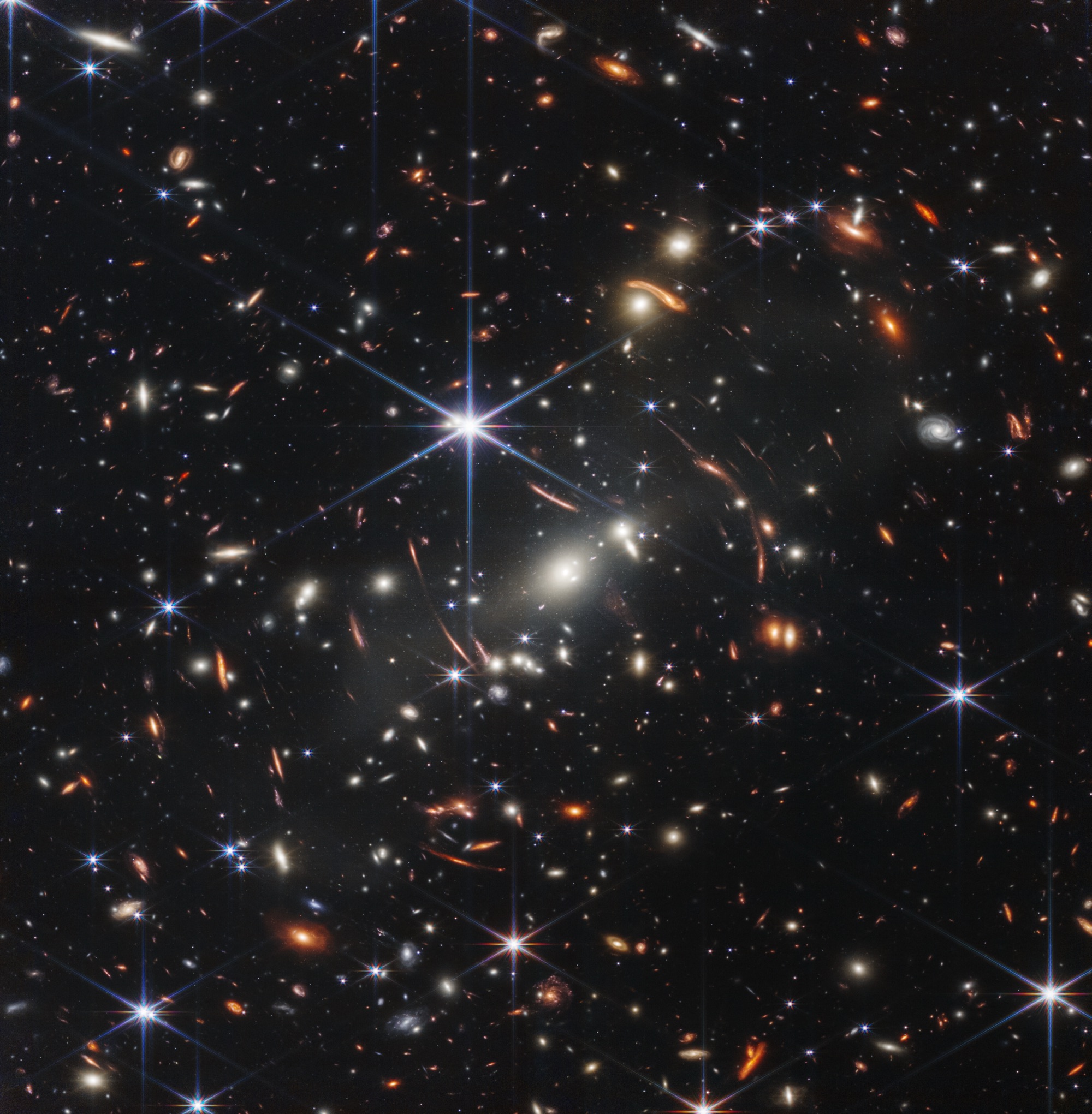
Why is space black if there are billions of stars?
Every direction you look should end on a star, so the whole sky should blaze with light. It doesn't, and the reason is hiding in plain sight.
If there are billions of stars out there, why is the night sky dark? Think about it. Every direction you look should eventually end on a star. The whole sky should be blazing with light, like daytime. It isn't.
01A puzzle from 1823
An astronomer called Heinrich Olbers got stuck on exactly this back in 1823. If the universe goes on forever and is filled with stars, the sky should be bright from edge to edge. The question became known as Olbers' paradox.

02Webb made it worse
NASA's Webb telescope only sharpened the problem. In 2022 it looked at a tiny black spot of sky, about the size of a grain of sand held at arm's length, and found thousands of galaxies in it. Each of those galaxies holds billions of stars.
So the light is out there. Two things hide it from us.
03First: time
The universe is about 13.8 billion years old. Light travels fast, but not infinitely fast, and light from really far away simply hasn't reached us yet. We only see stars inside the distance light has had time to cross, and that leaves gaps of darkness between them.
04Second: space is stretching
The universe is expanding, and that expansion stretches light as it travels. The oldest light of all, released long before the first stars, has been stretched so far that it now arrives as microwaves. Our eyes can't see microwaves.
05The answer Olbers got wrong
Olbers himself blamed dust. He thought clouds of dust between the stars were soaking up the light. But dust that absorbed that much light would heat up and start glowing too, so the sky would still be bright.
So the sky isn't black at all. It's glowing everywhere. Our eyes just can't see it.
That glow is called the cosmic microwave background, and it covers the whole sky. Its temperature is only about 2.7 degrees above absolute zero, roughly −270 °C.
Sources
- NASA's Webb delivers deepest infrared image of the universe yet, NASA
- Webb's First Deep Field (image and credit), ESA/Webb
- Planck reveals an almost perfect universe, ESA
- Tests of the Big Bang: the cosmic microwave background, NASA WMAP
Written by Facts Nero from the script of our video. Numbers were checked against the sources above.
More from Facts Nero
-
 Long video · 14 minNASA/JPL-Caltech
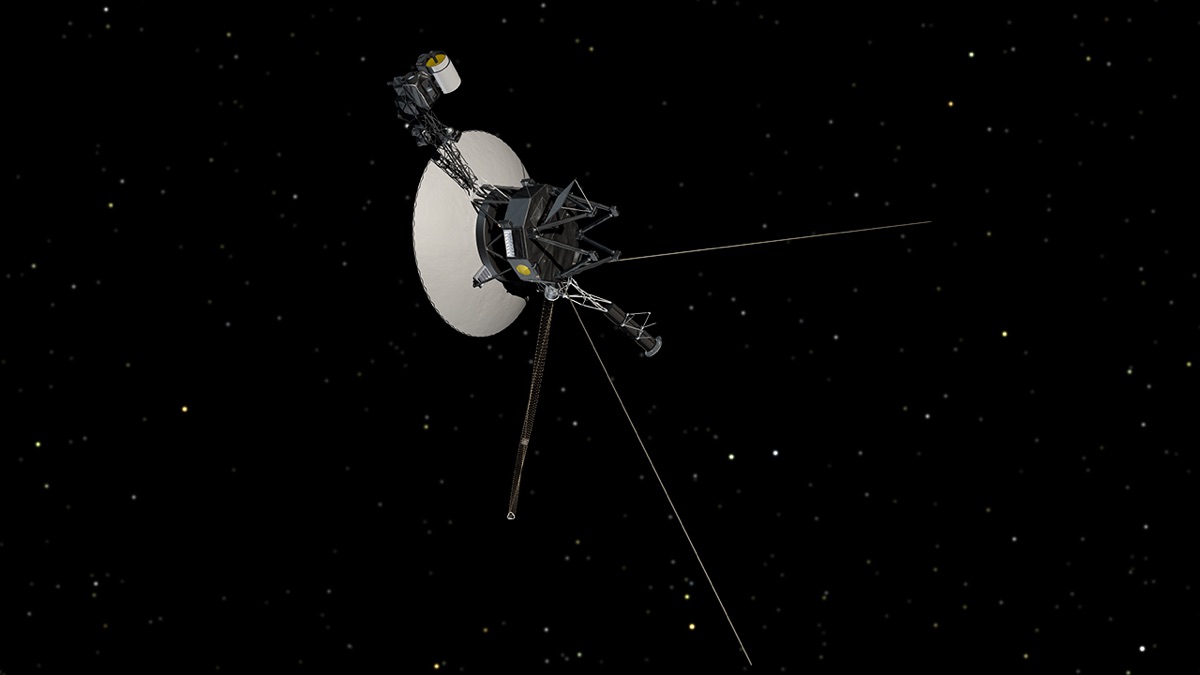
Voyager 1 is about to be one light-day from Earth
Launched in 1977 with less memory than one phone photo. On 18 November 2026 a message to it will take a full day to arrive.
Space probesRead · 7 minWatch ▶ -
 Short · 31 sNASA/JPL-Caltech
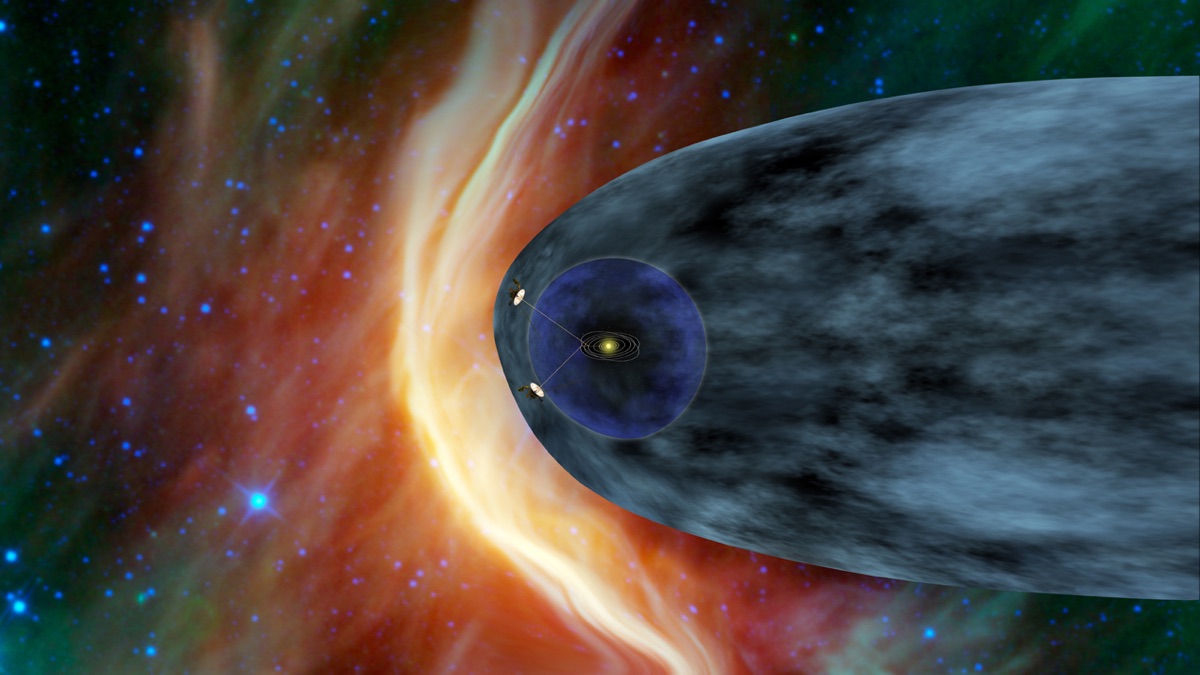
Where is Voyager 1 right now?
About 26 billion kilometres out, past the Sun's wind, with two instruments still running.
Space probesRead · 7 minWatch ▶