Why no one has walked on the Moon since 1972
Apollo landed astronauts on the Moon six times in three and a half years, then stopped. The race, the bill, the cancelled missions, and the plan to go back.
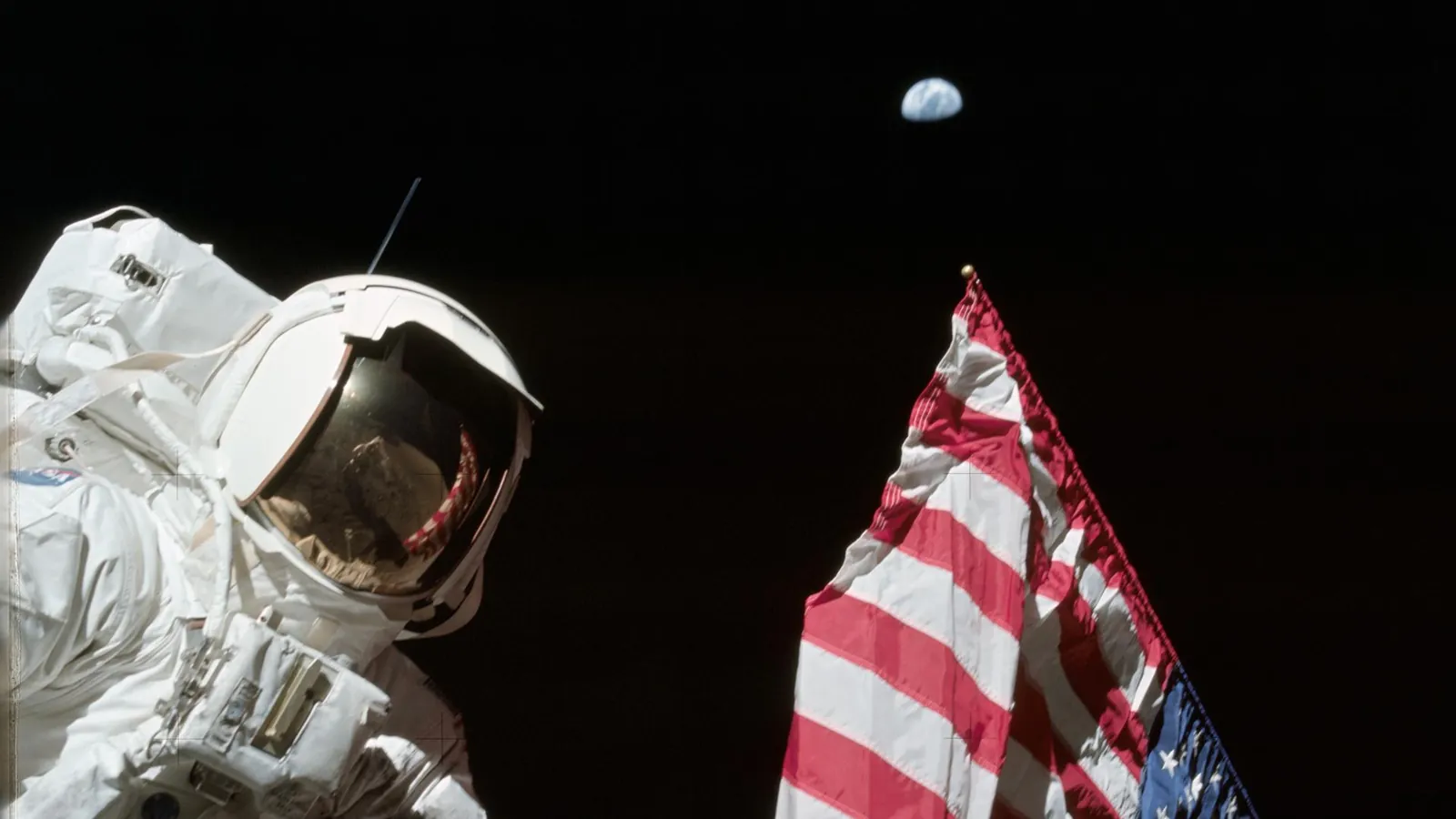
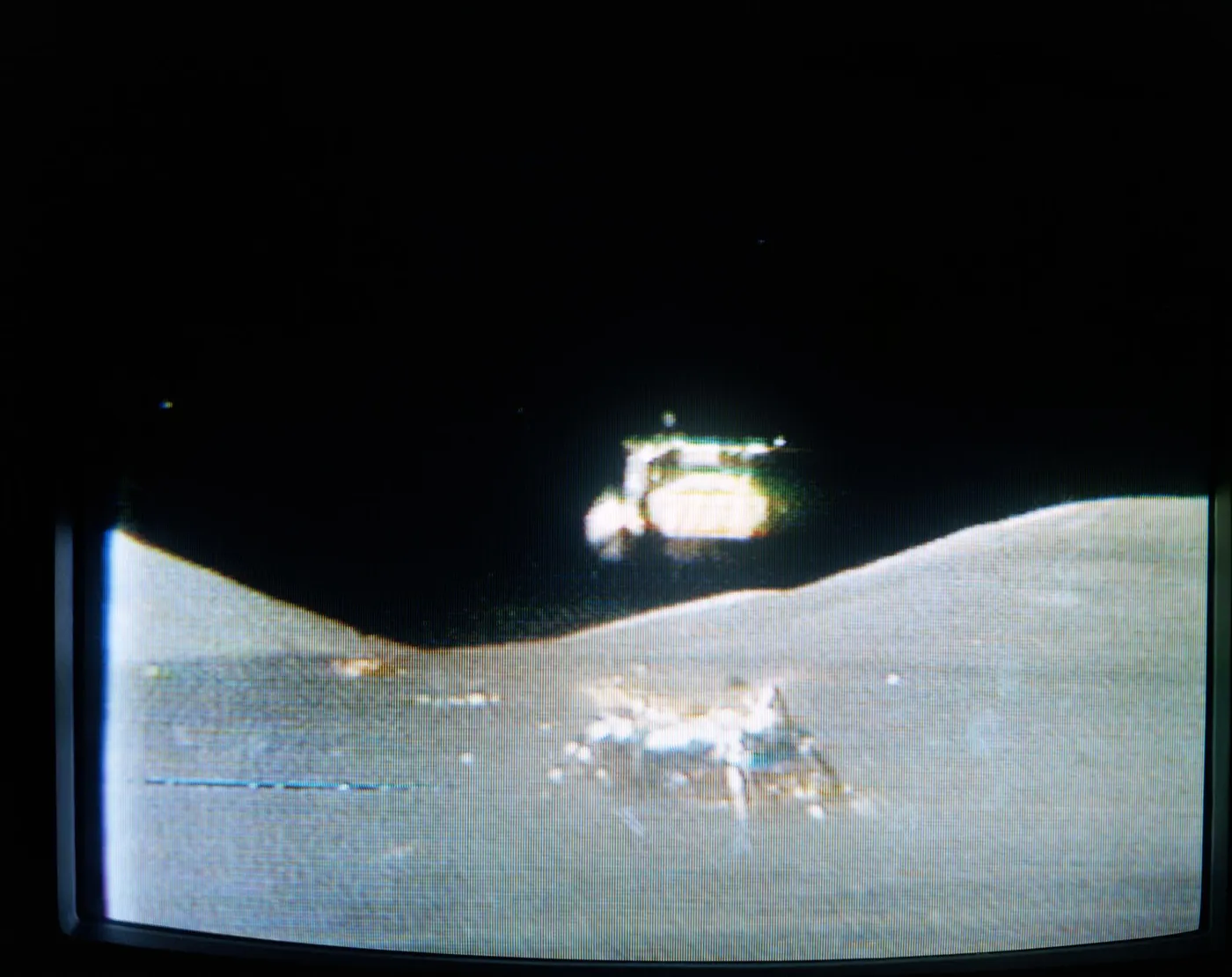
Between July 1969 and December 1972, NASA landed astronauts on the Moon six times. On 14 December 1972, Gene Cernan and Harrison Schmitt lifted off from the Taurus-Littrow valley at the end of Apollo 17. Nobody has landed there since, more than 53 years later.
The rockets were not what ran out. The reasons, and the money, did. Here is what the records show.
01A race, not a research plan
On 12 April 1961, the Soviet cosmonaut Yuri Gagarin became the first person to orbit the Earth. Eight days later, President John F. Kennedy sent a memo to his vice president, Lyndon Johnson. "Do we have a chance of beating the Soviets by putting a laboratory in space, or by a trip around the moon, or by a rocket to land on the moon, or by a rocket to go to the moon and back with a man," he asked. "Is there any other space program which promises dramatic results in which we could win?"
The review that followed recommended a crewed Moon landing. On 25 May 1961, Kennedy asked Congress to commit to "landing a man on the Moon and returning him safely to the Earth" before the end of the decade. Apollo 11 did it on 20 July 1969.
02The bill
Apollo was paid for at a level NASA has never seen since. In fiscal 1966, NASA spent $5.93 billion out of $134.5 billion in total federal outlays, or 4.4% of everything the US government spent, according to the White House budget office's historical tables. In 2025 it spent $24.6 billion out of $7.01 trillion: about 0.35%.
The Planetary Society, working from NASA's original budget documents, puts the cost of Project Apollo at $25.8 billion between 1960 and 1973, or about $309 billion in 2025 dollars. In 1973, NASA reported a total of $25.4 billion to Congress. Spending peaked in 1966, three years before the first landing.
03Three missions cancelled
At the time of Apollo 11, NASA was preparing for nine more Moon landings, ending with Apollo 20. That did not last. On 4 January 1970, with a tight budget ahead, NASA cancelled Apollo 20 so that its Saturn V could launch a space station instead. That station became Skylab, launched in 1973.
On 2 September 1970, NASA Administrator Thomas Paine cancelled two more: the missions then called Apollo 15 and Apollo 19. The rest were renumbered Apollo 14 to 17, which made Apollo 17 the last. According to the space historian John Logsdon, writing for the Smithsonian's National Air and Space Museum, Paine told President Richard Nixon that "the most compelling reason" was "the current and reasonably austere funding situation for NASA". He also cited "the risks involved in these difficult missions".
The decision was not only the White House's. Logsdon writes that it was NASA's own leaders who proposed dropping the two missions, so the agency could start work on its next big project, the space shuttle.
04The rockets that never flew
When Apollo 17 came home, three Saturn V rockets were left. One, SA-513, launched Skylab. The other two, SA-514 and SA-515, never flew. Their stages were split up, and most are now on display.
The Saturn V on display at NASA's Johnson Space Center in Houston is built from leftover stages of all three. The Smithsonian says it is the only Saturn V in existence made entirely of flight-ready stages. The one at Kennedy Space Center in Florida uses a ground-test first stage. The one at the US Space & Rocket Center in Huntsville, Alabama, is a dynamic test vehicle.
Six Moon landings in three and a half years. Then none for more than half a century.
05Going back
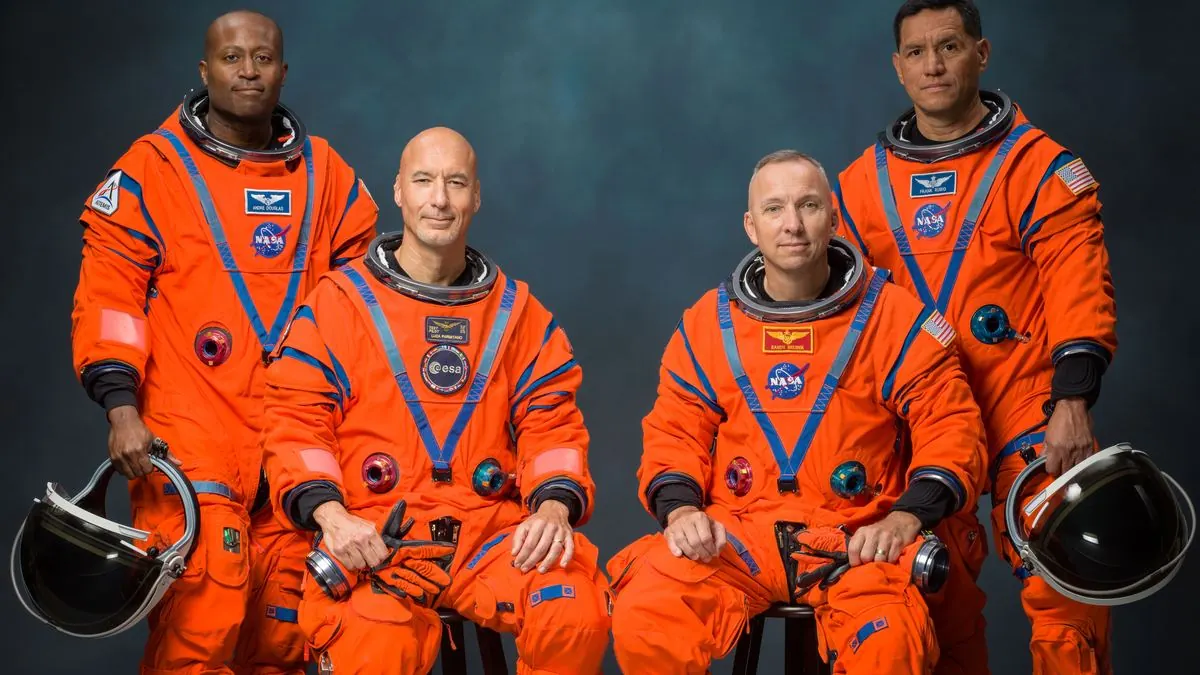
On 1 April 2026, NASA's Artemis II launched four astronauts around the Moon: NASA's Reid Wiseman, Victor Glover and Christina Koch, and the Canadian Space Agency's Jeremy Hansen. At their farthest they were 252,756 miles (about 406,800 km) from Earth, farther than any humans before. They splashed down off San Diego on 10 April. They did not land.
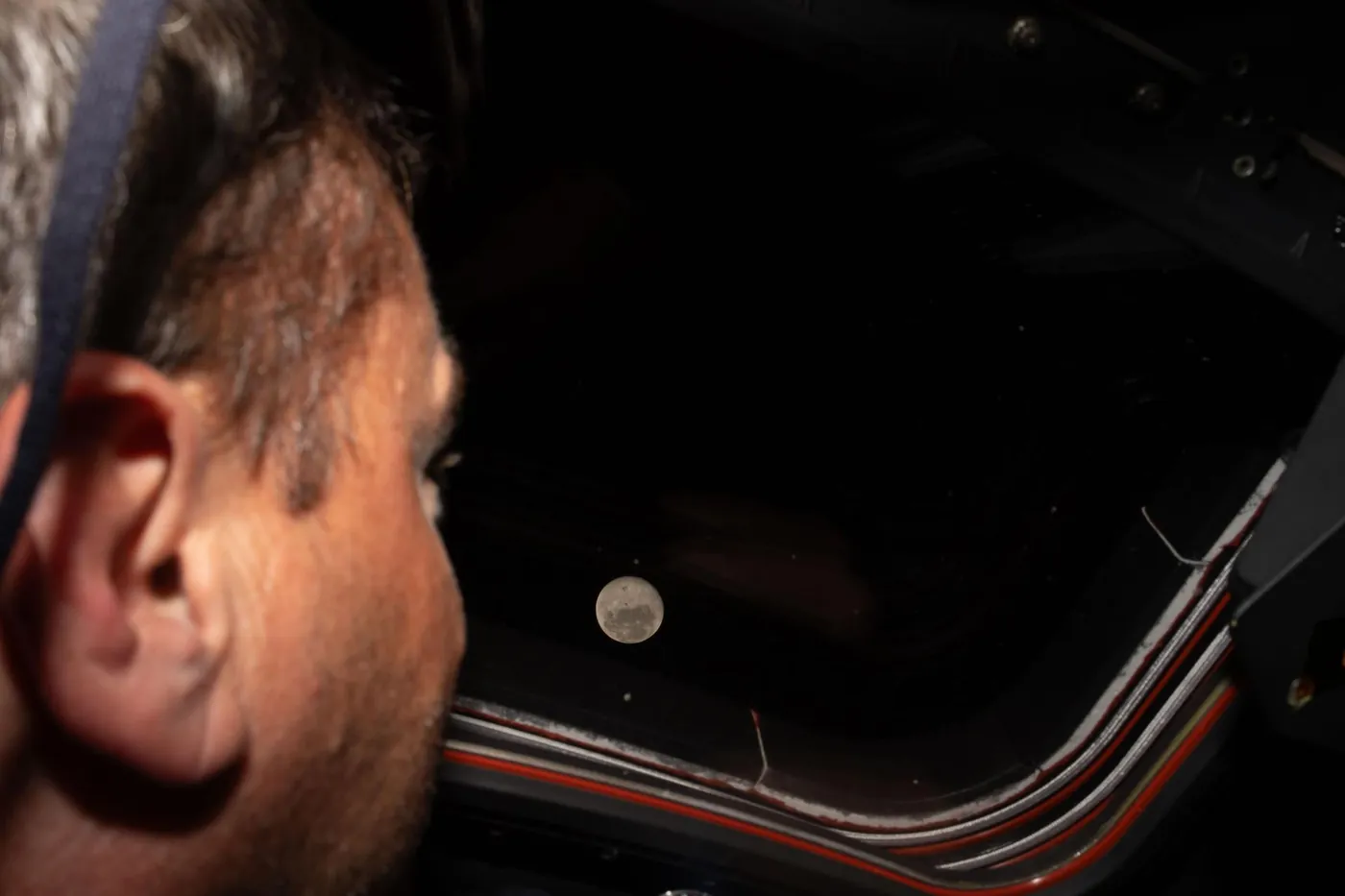
Artemis III, planned for 2027, will stay in low Earth orbit to test Moon landers. NASA has moved the first landing to Artemis IV, planned for early 2028. Two of its four astronauts are to spend about a week near the Moon's south pole. At a briefing on 23 October 2026, NASA leaders said the 2028 landing was still the goal.
China is aiming for the same place. According to the state news agency Xinhua, China is targeting a crewed lunar landing by 2030, with a Long March-10 rocket, the Mengzhou crew spacecraft and the Lanyue lander. "We will spare no effort to strive for the goal of achieving the first Chinese landing on the moon by 2030," said Zhang Jingbo, a spokesman for the China Manned Space Agency, in May 2026.
Sources
- Apollo 11, NASA
- 50 Years Ago: Apollo 17 Heads Home to Earth, NASA
- Apollo 17, NASA
- Ending Apollo: Why Did We Stop Going to the Moon? (John Logsdon), Smithsonian National Air and Space Museum
- "We Choose to go to the Moon": JFK's Moon Shot, Smithsonian National Air and Space Museum
- Stephen J. Garber, Multiple Means to an End: A Reexamination of President Kennedy's Decision to Go to the Moon (PDF), NASA History Office
- Historical Tables, Table 4.1 (Outlays by Agency) and Table 4.2, White House Office of Management and Budget
- Your Guide to NASA's Budget, The Planetary Society
- How much did the Apollo program cost?, The Planetary Society
- Reconstructing the Cost of the One Giant Leap, The Planetary Society
- A new accounting for Apollo: how much did it really cost?, The Space Review
- 50 Years Ago: NASA Cancels Apollo 20 Mission, NASA
- 50 Years Ago: Preparations for Apollo 14, 15, and 16, NASA
- Three Saturn Vs on Display Teach Lessons in Space History (archived), NASA Marshall Space Flight Center
- Where Are NASA's Extra Saturn V Moon Rockets from the Apollo Era?, Space.com
- Rocket, Liquid Fuel, Launch Vehicle, Saturn V, with Transporter, Smithsonian National Air and Space Museum
- NASA Welcomes Record-Setting Artemis II Moonfarers Back to Earth, NASA
- NASA Adds Mission to Artemis Lunar Program, Updates Architecture, NASA
- Artemis IV, NASA
- NASA Shares Artemis Acceleration Plans for Moon Missions (23 October 2026), NASA
- NASA keeps options open to preserve 2028 Artemis lunar landing, SpaceNews
- China's manned space program releases major tasks ahead, Xinhua
- China shakes up its space programs to land astronauts on the moon by 2030, Space.com
Written by Facts Nero from the script of our video. Every claim was checked against the sources above on 27 October 2026. Corrections to the video: three Apollo landings were cancelled in 1970 (Apollo 20 in January, then the missions numbered Apollo 15 and 19 at the time), and NASA's own leaders proposed the last two cuts so they could start the space shuttle, so the cause was more than the money drying up; the two unused Saturn Vs were split up, and the museum rockets mix their stages with others and with test hardware; the Apollo cost of over $300 billion is The Planetary Society's estimate in 2025 dollars ($309 billion); and China's stated goal is a landing by 2030.
More from Facts Nero
-
 Long video · 10 minNASA/Bill Stafford
Why Artemis III won't land on the Moon
Four astronauts, three heavy-lift rockets and test versions of two Moon landers, all in Earth orbit.
MissionsRead · 7 minWatch ▶ -
 Short · 46 sNASA/Keegan Barber
Why rocket flames almost vanish in space
The engine is still firing. Without air pushing back, the exhaust spreads out, and the leftover fuel has nothing to burn with.
RocketsRead · 3 minWatch ▶