Facts Nero
NASA's Swift telescope has fallen back to Earth after 22 years
Swift, NASA's gamma-ray burst hunter, burned up over Indonesia on 4 November 2026. A rescue robot sent to lift it higher failed in August.
By Facts Nero5 min read
Key facts
- Launched
- 20 November 2004
- Designed to last
- 2 years
- Final observation
- 20 October 2026, at about 275 km
- Re-entry
- 4 November 2026, 12:39 UTC (6:09 p.m. IST)
- Where
- Over North Sumatra, Indonesia
- Gamma-ray bursts seen
- More than 2,000
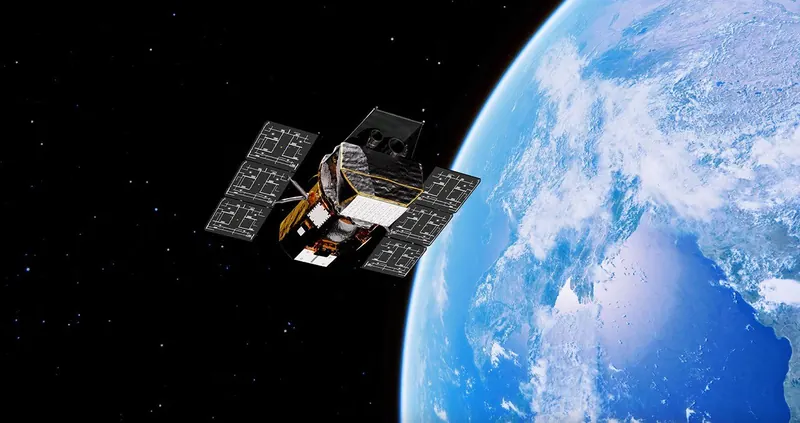
NASA's Neil Gehrels Swift Observatory has come home. The US Space Force confirmed that Swift re-entered Earth's atmosphere at 7:39 a.m. EST on Wednesday 4 November 2026 (12:39 UTC, or 6:09 p.m. in India) over the North Sumatra region of Indonesia, at about 3.4 degrees north and 98.6 degrees east. NASA expected most of the spacecraft to burn up, but says some parts may have survived the fall.
That ended almost 22 years in orbit for a telescope that was built to work for two. It also closed a story that ran through the whole of 2026: a commercial robot was sent to grab Swift and push it higher, and it never got the chance.
01A two-year mission that lasted 22
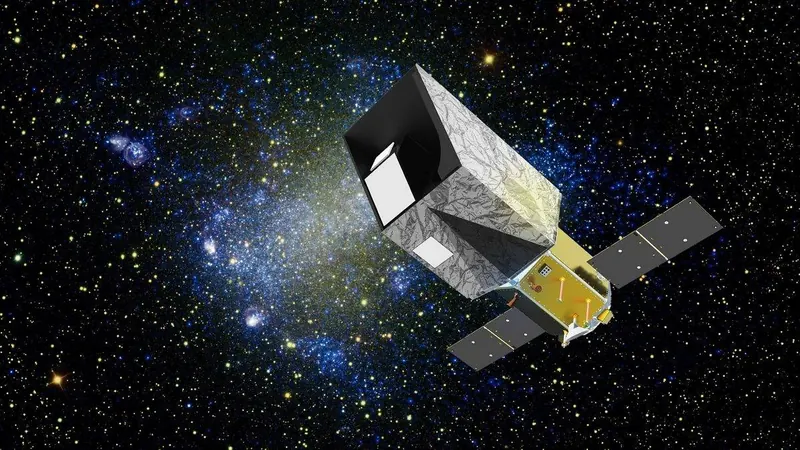
Swift launched on 20 November 2004 on a Delta II rocket from Cape Canaveral. Its job was to catch gamma-ray bursts, the most powerful explosions in the universe. They flash up without warning and fade within seconds to minutes, so Swift was built to swing its telescopes toward a new burst very quickly, within about a minute according to Spaceflight Now, and to alert observatories around the world so they could look too.
NASA designed Swift for a two-year prime mission. Instead it kept working for more than ten times as long. Over its career, NASA says, Swift observed more than 2,000 gamma-ray bursts and studied more than 1,400 supernova explosions. It watched stars being torn apart by black holes, monitored active galaxies, made an all-sky X-ray survey and even studied comets and asteroids in our own solar system. Swift's data has contributed to about 7,000 published scientific papers.
“Swift delivered an incredible, lasting return on investment for the nation, designed for a two-year primary mission but productive for more than 10 times as long,” said Shawn Domagal-Goldman, director of NASA's Astrophysics Division.
02Why Swift was falling
Every satellite in low Earth orbit brushes against the very thin outer edge of the atmosphere, and that drag slowly pulls it down. Swift had no engine of its own to climb back up. In the last few years the Sun has been very active, and NASA says that solar activity increased the drag on Swift, which began to sink faster than expected.
To buy time, teams at NASA's Goddard Space Flight Center and Penn State changed how Swift was operated, to keep it above about 300 kilometres, the height at which a boost had the best chance. At one point they even paused science observations to reduce drag.
03The rescue that didn't happen
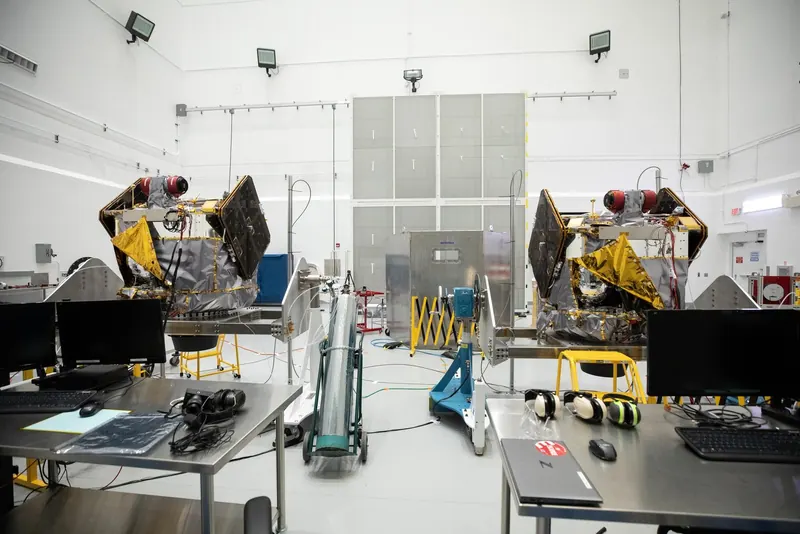
In September 2025, NASA hired Katalyst Space of Flagstaff, Arizona, to do something never tried before at this speed: design, build and launch a robotic spacecraft that would meet Swift, grab it and lift it into a higher orbit, all in less than a year. Space.com and The Conversation report the contract was worth $30 million.
Katalyst's spacecraft, called LINK, launched in July 2026 on a Northrop Grumman Pegasus XL rocket. Weeks later it ran into trouble controlling its orientation. In August, NASA and Katalyst announced that LINK would not capture or boost Swift. It would only try to fly near Swift to test rendezvous techniques. According to Space.com and The Conversation, LINK itself fell back to Earth in September, before the telescope it was meant to save.
NASA still called the effort worthwhile. “From the beginning, this was a high-risk, high-reward mission,” Domagal-Goldman said in September, as quoted by Space.com. The attempt tested how quickly a commercial spacecraft can be built to service a satellite in orbit.
04The last weeks
After the boost was called off, Swift went back to doing science. NASA says it observed hundreds more targets, from the remains of exploded stars to active supermassive black holes and comets. But observing meant pointing the spacecraft in ways that increased drag, and Swift began to sink quickly again.
On 20 October 2026, at about 275 kilometres (171 miles), Swift could no longer hold steady against the drag and went into safe mode. That was its final observation. The operations team at Penn State then sent a command that effectively ended the mission, and NASA announced the end of Swift's science on 23 October. Twelve days later, it was gone.
Was anyone in danger? Before the fall, NASA put the chance that surviving pieces would hurt anyone on the ground at about 1 in 2,100, according to Space.com and Spaceflight Now. There have been no reports of damage.
05What fills the gap?
No other telescope today can do exactly what Swift did: spot a burst, turn to it within a minute and tell the rest of the world. NASA says it will use and extend its existing fleet of space telescopes to react quickly to cosmic events, and is looking at fast commercial missions and new ones. Swift's archive of observations, the agency adds, will keep producing discoveries for decades.
Swift joins a long list of spacecraft that outlived their plans many times over. You can read about some of the others, and where they are now, in our story on five spacecraft NASA lost contact with.
About this article
Written by Facts Nero from NASA's Swift updates and the reports above, all checked on 5 November 2026. This is a written article with no video. The re-entry time and place, the mission totals, the final observation and the boost mission's outcome come from NASA. The launch date and rocket come from Spaceflight Now and NASA's 2004 launch photographs. The $30 million contract value, the date LINK re-entered and the 1-in-2,100 risk figure are reported by news outlets (named in the text) rather than in the NASA pages we cite. The time of about a minute to turn toward a burst is from Spaceflight Now. We left out details of LINK's spin and its closest approach to Swift, because we could find them in only one report. The illustration is NASA artwork, not a photograph.
Sources
- NASA's Swift Observatory Re-Entered Atmosphere (updated 4 November 2026), NASA Science
- NASA's Swift Mission Ends, Leaves Behind Scientific Bonanza (23 October 2026), NASA Science
- NASA's Swift Mission Ends Ahead of Re-Entry (23 October 2026), NASA Science
- Swift Boost Mission, NASA Science
- NASA Updates Next Steps for Commercial Swift Boost Mission (August 2026), NASA Science
- NASA's Neil Gehrels Swift Observatory reenters over Western Indonesia (4 November 2026), Spaceflight Now
- NASA's Swift space telescope crashes back to Earth after failed rescue attempt (4 November 2026), Space.com
- NASA's Swift telescope has burned up, months after a robot sent to save it failed, The Conversation