Facts Nero
Five spacecraft we lost contact with, and where they are now
Pioneer 10 faded out, Opportunity was buried by a dust storm, Dawn ran out of fuel, Cassini was steered into Saturn and ISEE-3 woke up for one last summer. What happened to each one.
By Facts Nero7 min readLong video 5 min
Key facts
- Pioneer 10, last signal
- 23 January 2003, 12.23 billion km away
- Opportunity, last message
- 10 June 2018
- Dawn, out of fuel
- Missed calls 31 Oct and 1 Nov 2018
- Cassini, end of signal
- 15 Sept 2017, 7:55 a.m. EDT
- ISEE-3, contact lost
- 16 Sept 2014 (Reboot team)
- Probes leaving the solar system
- 5
Watch the video
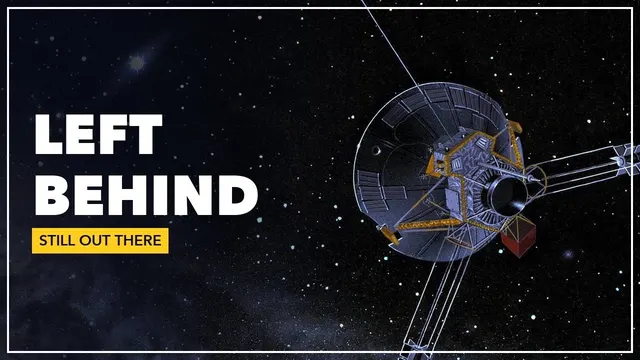
On 23 January 2003, a dish on Earth picked up a signal from Pioneer 10 so weak that it was almost nothing. NASA says it came from 12.23 billion km away. It was the last thing anyone heard from the spacecraft. Our video tells the story of five spacecraft whose missions ended like that, and of the five probes that are on their way out of the solar system. This article checks the video against NASA's own records and fixes the places where it went wrong.
The video's title says these spacecraft are “still flying right now”. That is not true of all of them. Pioneer 10, Pioneer 11, Dawn and ISEE-3 are still moving through space. Opportunity is parked on the surface of Mars, and Cassini no longer exists: it burned up in Saturn's atmosphere. Cassini also did not simply drop out of contact. NASA ended its mission on purpose.
01Pioneer 10: the voice that faded
Pioneer 10 launched on 2 March 1972. It was the first spacecraft to cross the asteroid belt and the first to fly past Jupiter, which it passed most closely on 4 December 1973. It was designed for a 21-month mission and lasted more than 30 years.
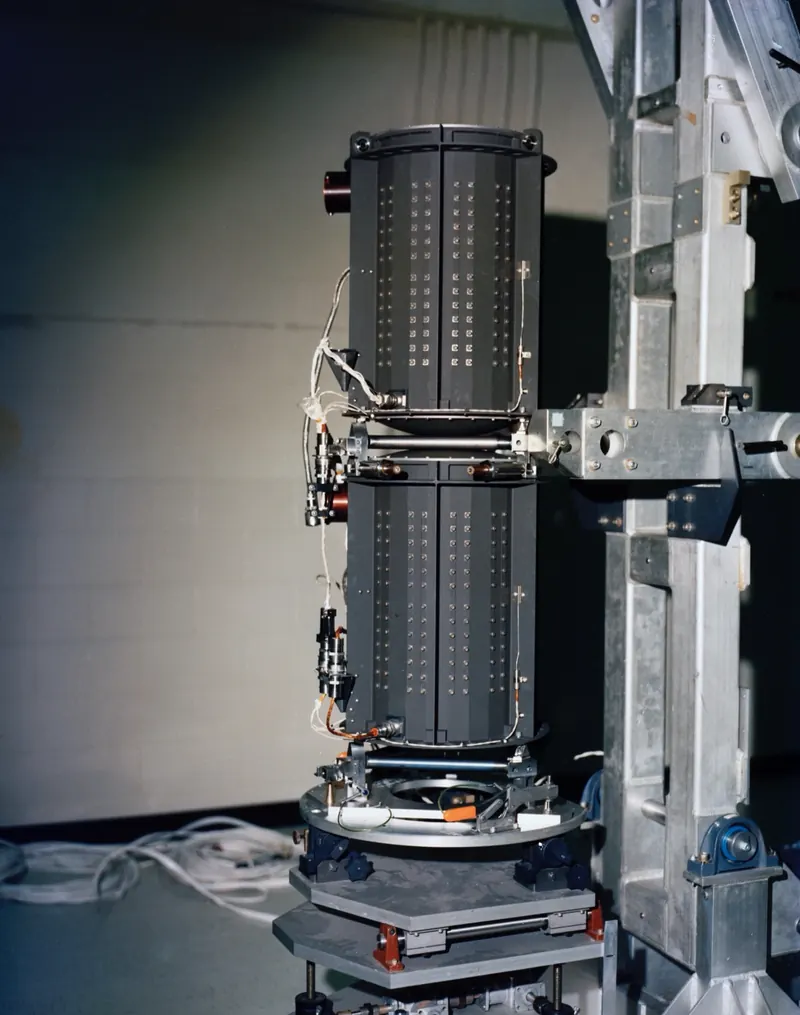
Its power came from radioisotope thermoelectric generators, which turn the heat of decaying plutonium into electricity and slowly weaken over time. NASA says that by 2003 the power source had decayed too far to run the radio transmitter properly. That last signal of January 2003 took about 11 hours and 20 minutes to reach Earth. NASA tried again a few weeks later and heard nothing. A final attempt in early March 2006 also failed.
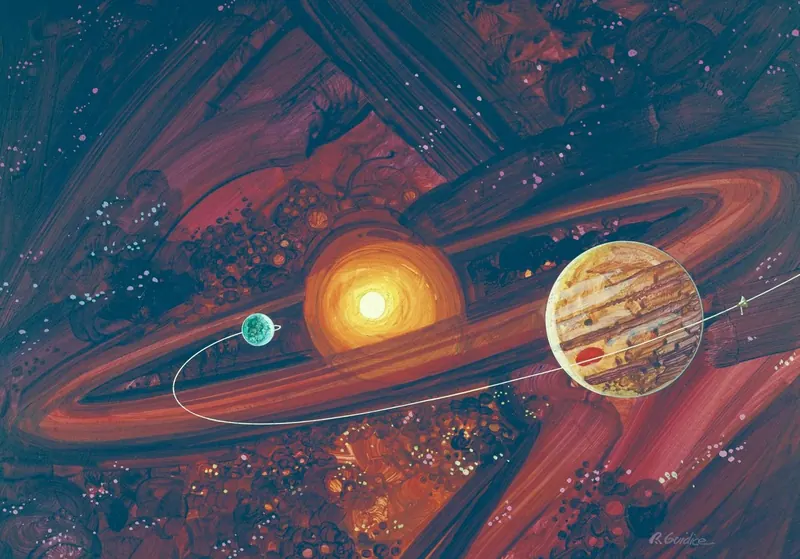
Pioneer 10 is heading roughly toward Aldebaran, the red star that forms the eye of Taurus, the Bull. NASA expects it to pass the star in about two million years. The video also gave Aldebaran's distance as 68 light-years. NASA's Pioneer pages give no distance, so we have left that figure out.
Its twin, Pioneer 11, was the first spacecraft to study Saturn up close. NASA's records show its last contact on 30 September 1995. NASA says it will pass near the star Lambda Aquilae, in the constellation Aquila, in almost four million years.
02Opportunity: buried by a dust storm
Opportunity landed on Mars on 24 January 2004 (UTC). NASA's plan was for it to last 90 Martian days and drive 1,000 metres. Instead it lasted almost 15 years. NASA says it exceeded its expected lifetime 60 times over and drove more than 45 km.
In June 2018 a severe dust storm that covered the whole planet blanketed the rover's location. Opportunity ran on solar power, and its last message arrived on 10 June 2018. Engineers spent about eight months trying to wake it up and sent more than a thousand commands. They made their final attempt on Tuesday, 12 February 2019, and NASA declared the mission over the next day.
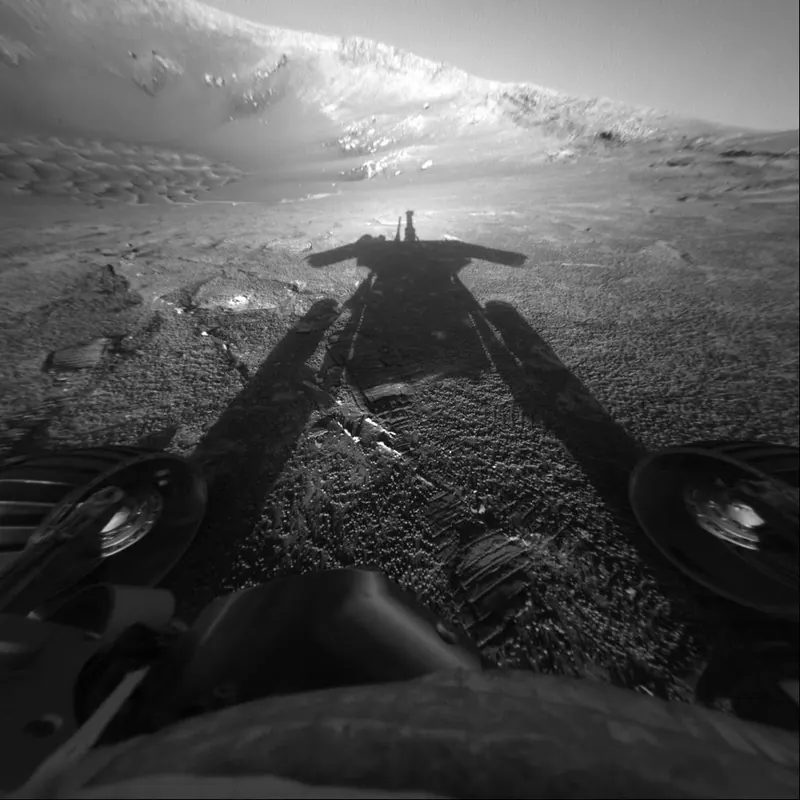
“Farewell, Opportunity, and well done,” said John Callas, the rover project's manager at NASA's Jet Propulsion Laboratory, when the mission ended. The rover is still there, in a place called Perseverance Valley.
03Dawn: it had power but no fuel
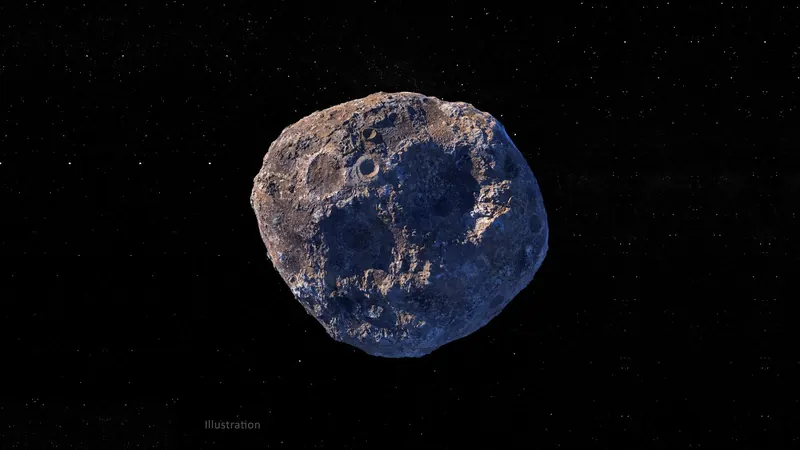
Dawn explored the two largest bodies in the main asteroid belt, Vesta and Ceres. It is still orbiting Ceres. It used ion engines to travel, but it also carried hydrazine, a fuel it used to control which way it pointed.
NASA says Dawn missed scheduled calls with its Deep Space Network on 31 October and 1 November 2018. Engineers ruled out other causes and concluded that the hydrazine had run out. Without it, Dawn could no longer keep its antennas aimed at Earth or turn its solar panels to the Sun to recharge. NASA declared the mission over on 1 November 2018.
The video said Dawn will stay in orbit for at least 20 years, and “probably 50 or more”. NASA's figure is more precise. Dawn will stay in orbit for at least 20 years, and engineers have more than 99% confidence that its orbit will last at least 50 years. NASA chose a stable orbit on purpose, to protect Ceres under its planetary protection rules.
04Cassini: ended on purpose
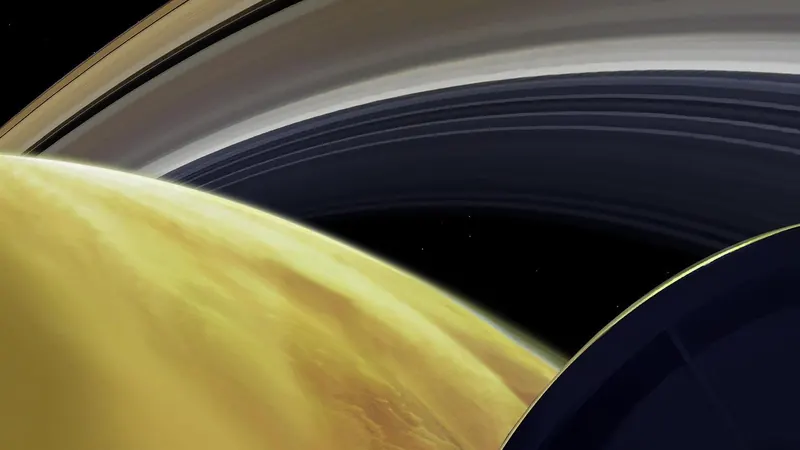
Cassini orbited Saturn from 2004 to 2017, and its own discoveries are why NASA ended it the way it did. NASA calls Titan and Enceladus “ocean worlds”, and Enceladus has an ocean under its ice with signs of hydrothermal activity. As Cassini ran low on fuel, NASA chose not to leave it in orbit, where it might one day crash into one of those moons and carry microbes from Earth there.
Instead, Cassini flew 22 weekly “Grand Finale” dives between Saturn and its rings. On 15 September 2017 it plunged into Saturn, firing its thrusters to stay steady and sending back science data as it fell. NASA says contact was lost at 7:55 a.m. EDT. That was 5:25 p.m. in India.
05ISEE-3: the one that answered
ISEE-3 launched on 12 August 1978 to study how the Sun affects the space around Earth. Under its later name, the International Cometary Explorer, it became the first spacecraft to fly past a comet, in 1985. NASA ended its operations in 1997 but left its transmitter on, and the spacecraft carried on in its long loop around the Sun.
In 2014, as it came back near Earth, a team of volunteer scientists and engineers called the ISEE-3 Reboot Project raised $159,502 through crowdfunding to try to bring it back. NASA signed an agreement with them in May 2014. Using the Arecibo radio telescope in Puerto Rico, they made two-way contact at the end of May. Ars Technica reported it as the first time the spacecraft had been in contact with Earth in 16 years.
On 2 July 2014 its thrusters fired for the first time in 27 years. A longer firing on 8 July failed. NASA's explanation is that the spacecraft had probably run out of nitrogen, the gas that pushes fuel to the thrusters. The video put this differently, saying the nitrogen had “leaked away during 27 quiet years”. The 27 years refers to the gap between thruster firings, not a known leak, and the spacecraft was not silent for 27 years. No one knows when the nitrogen was lost.
Without working thrusters, the team could not change ISEE-3's orbit. It flew past the Moon on 10 August 2014, at about 15,600 km, just as had been predicted years earlier. The Reboot team says it lost contact on 16 September 2014. ISEE-3 is still looping around the Sun.
06The five that are leaving for good
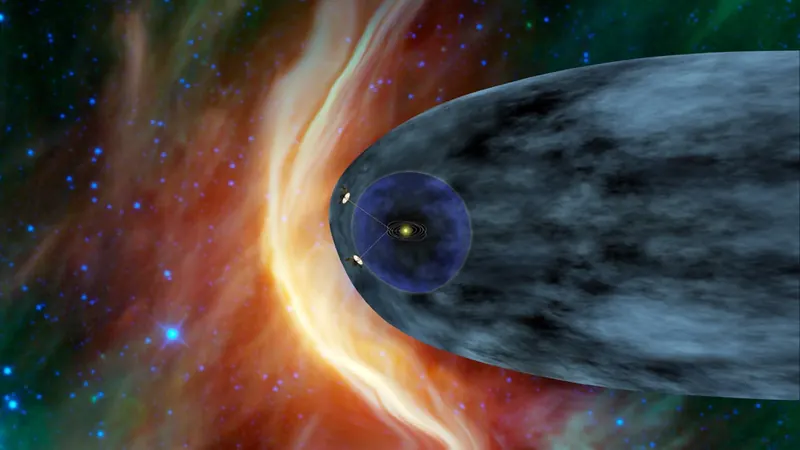
NASA says five spacecraft are on paths that will take them out of the solar system: Pioneer 10, Pioneer 11, Voyager 1, Voyager 2 and New Horizons. The two Pioneers are already silent. The two Voyagers and New Horizons are still in contact.
The video calls Voyager 1 “next”. That is a guess, not a NASA forecast. NASA has been switching off Voyager 1's science instruments one at a time to save power, and both Voyagers will eventually go quiet. But no one can say which spacecraft will fall silent first. What is certain is a milestone this month: around 18 November 2026, Voyager 1 will be one light-day from Earth. A radio message sent at breakfast will reach it at about breakfast the next day.
None of these five will come home. Pioneer 10 will be passing Aldebaran's neighbourhood long after anyone who built it is gone.
About this article
Written by Facts Nero to go with our video of 1 November 2026, checked against the sources above on 3 November 2026. Corrections to the video: (1) its title says the spacecraft are “still flying”, but Opportunity is on the surface of Mars and Cassini burned up in Saturn, which NASA did on purpose; (2) the 68-light-year distance to Aldebaran is not in NASA's Pioneer material, so we dropped it; (3) Dawn's orbit is “more than 99% confidence of at least 50 years”, not “probably 50 or more”; (4) ISEE-3's “27 quiet years” is wrong: 27 years was the gap since its thrusters last fired, it had been out of contact for about 16 years (Ars Technica), and NASA says only that the failed firing was probably due to a lack of nitrogen; (5) the claim that Voyager 1 is “next” to fall silent is our guess, not a NASA forecast. The 16 September 2014 loss of contact with ISEE-3 comes from the Reboot team's own report. The Cassini time in India is our own conversion from EDT. The images are by NASA and carry no agency logos.
Sources
- Pioneer 10 mission page: launch, Jupiter, last signal, final attempt in 2006, Aldebaran, NASA Science
- Pioneer 10 Sends Last Signal, NASA Science
- The Outer Planets: Pioneer 10 & 11, LASP, University of Colorado
- Pioneer 11 mission page: one of five spacecraft leaving the solar system, Lambda Aquilae, NASA Science
- NASA's Record-Setting Opportunity Rover Mission on Mars Comes to End (13 February 2019), NASA
- NASA's Mars rover pronounced dead: 'Farewell, Opportunity, and well done', RNZ
- NASA's Dawn Mission to Asteroid Belt Comes to End (1 November 2018), NASA
- Dawn mission to asteroid belt ends, SpaceNews
- NASA's Cassini Spacecraft Ends Its Historic Exploration of Saturn (15 September 2017), NASA
- Cassini mission ends with plunge into Saturn, SpaceNews
- ISEE-3/ICE mission page: 1997 shutdown, 2014 agreement, thruster firings, lunar flyby, NASA Science
- ISEE-3 spacecraft makes first Earth contact in 16 years, Ars Technica
- ISEE-3 Reboot Project Raises $159,502, NASA Watch
- ISEE-3 is in Safe Mode (ISEE-3 Reboot Project, archived), Space College
- ISEE-3 post lunar flyby status (loss of nitrogen pressurant), Dennis Wingo, ISEE-3 Reboot Project
- Voyager 1 one light-day from Earth on November 17-18, 2026, EarthSky